
This post may contain affiliate links. If you purchase through these links, we may earn a small commission at no extra cost to you. We only recommend products we genuinely believe will help your homeschool.
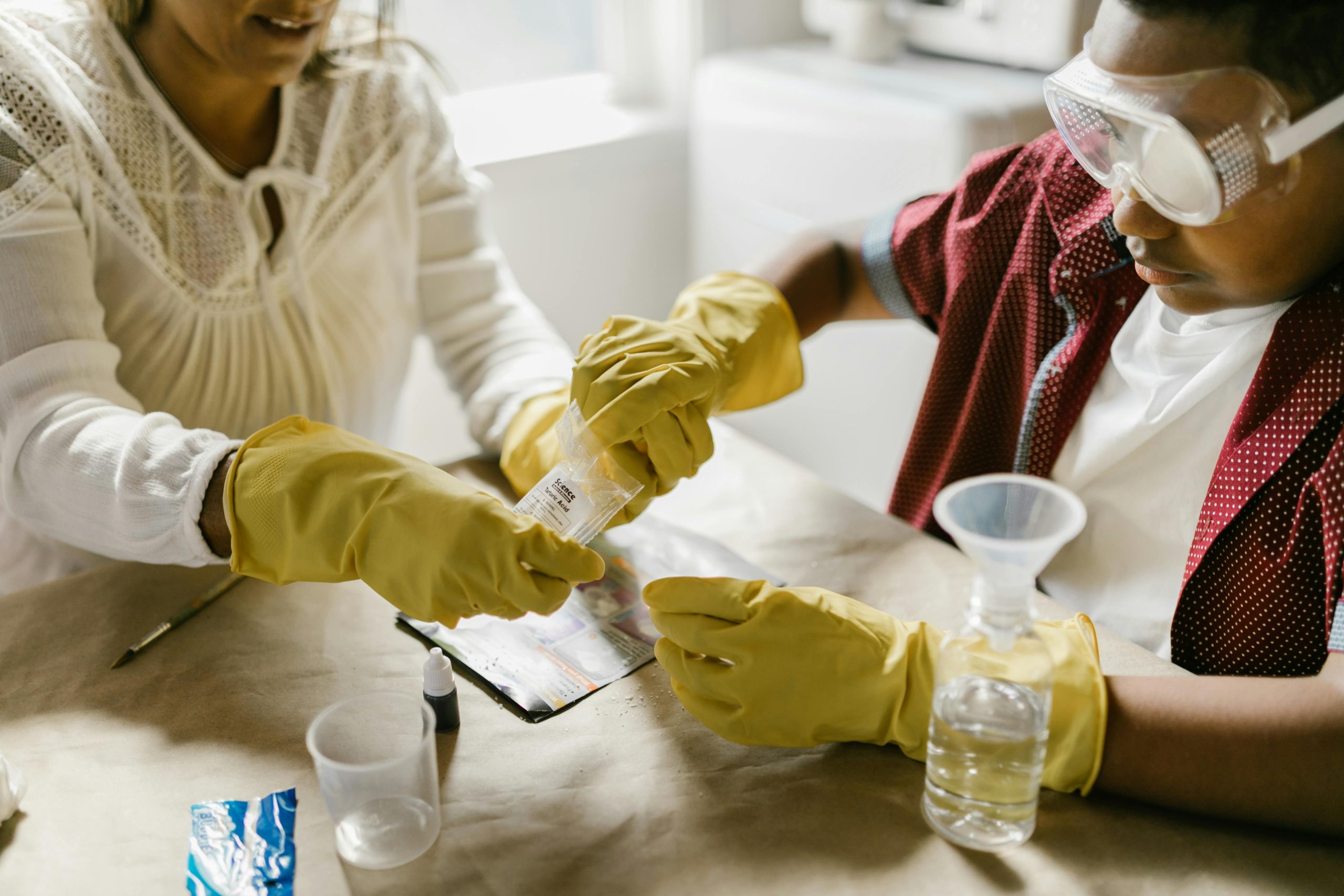
Teaching science at home scares many homeschool parents. The subject brings up images of complex gear, dangerous chemicals, and expertise most of us don’t have. However, science at home offers great advantages. You get individual pacing and one-on-one attention during experiments. You have freedom to pursue topics that capture your child’s curiosity. These benefits far outweigh the early challenges most parents expect.
This guide walks you through everything you need to teach science well at home. We cover choosing curriculum and setting up a home lab. We address common challenges and building scientific thinking skills. You’ll find practical tips for making science engaging and effective. For curriculum options, also see our best homeschool science curriculum guide.
Quick Overview: Teaching Science at Home
Successful home-based STEM education requires:
- Age-appropriate curriculum matching your child’s developmental stage
- Regular hands-on experiments and observations
- Connection between scientific concepts and everyday life
- Documentation of learning through notebooking or lab reports
- Consistent schedule with flexibility for exploration
Understanding Your Educational Philosophy
Before picking curriculum or planning lessons, first think about how you want to approach this subject. Your philosophy shapes everything from materials to daily practice.
Discovery-Based vs. Textbook-Driven Approaches
Discovery-based learning starts with observation and hands-on tests. It lets students develop questions and seek answers through study. This approach mirrors how scientists actually work. However, it requires more parent prep and flexibility.
In contrast, textbook-driven methods present info step by step. They ensure complete coverage of required topics. Students read, do exercises, and run experiments that show concepts already taught. This approach provides structure and clear progress.
Most good programs blend both methods: step-by-step content with real discovery chances. The best approach depends on your teaching style, your child’s learning needs, and your available time.
Living Books vs. Traditional Textbooks
Living books teach natural sciences through engaging stories, biographies of great thinkers, and accounts of natural events. Charlotte Mason homeschoolers especially favor this method. They use quality literature with nature study and hands-on work. According to Ambleside Online, this approach builds lasting scientific curiosity.
On the other hand, standard textbooks present info quickly with exercises for practice. They ensure topic coverage and align with standardized goals. Many families use textbooks as their main guide while adding living books for depth and fun.
Integrated vs. Subject-Specific Science
Elementary students often do well with mixed approaches. These weave STEM concepts throughout learning rather than treating them as separate subjects. These topics connect naturally to nature walks, cooking, gardening, and watching everyday events.
By middle and high school, subject-specific courses (biology, chemistry, physics) usually become needed for transcripts and college prep. Planning your scope and order helps ensure good coverage across years.
Choosing Science Curriculum by Age
Elementary Science (Grades K-5)
Young children learn best through observation, exploration, and hands-on activities. At this stage, building curiosity and critical thinking matters more than memorizing content.
Key Focus Areas:
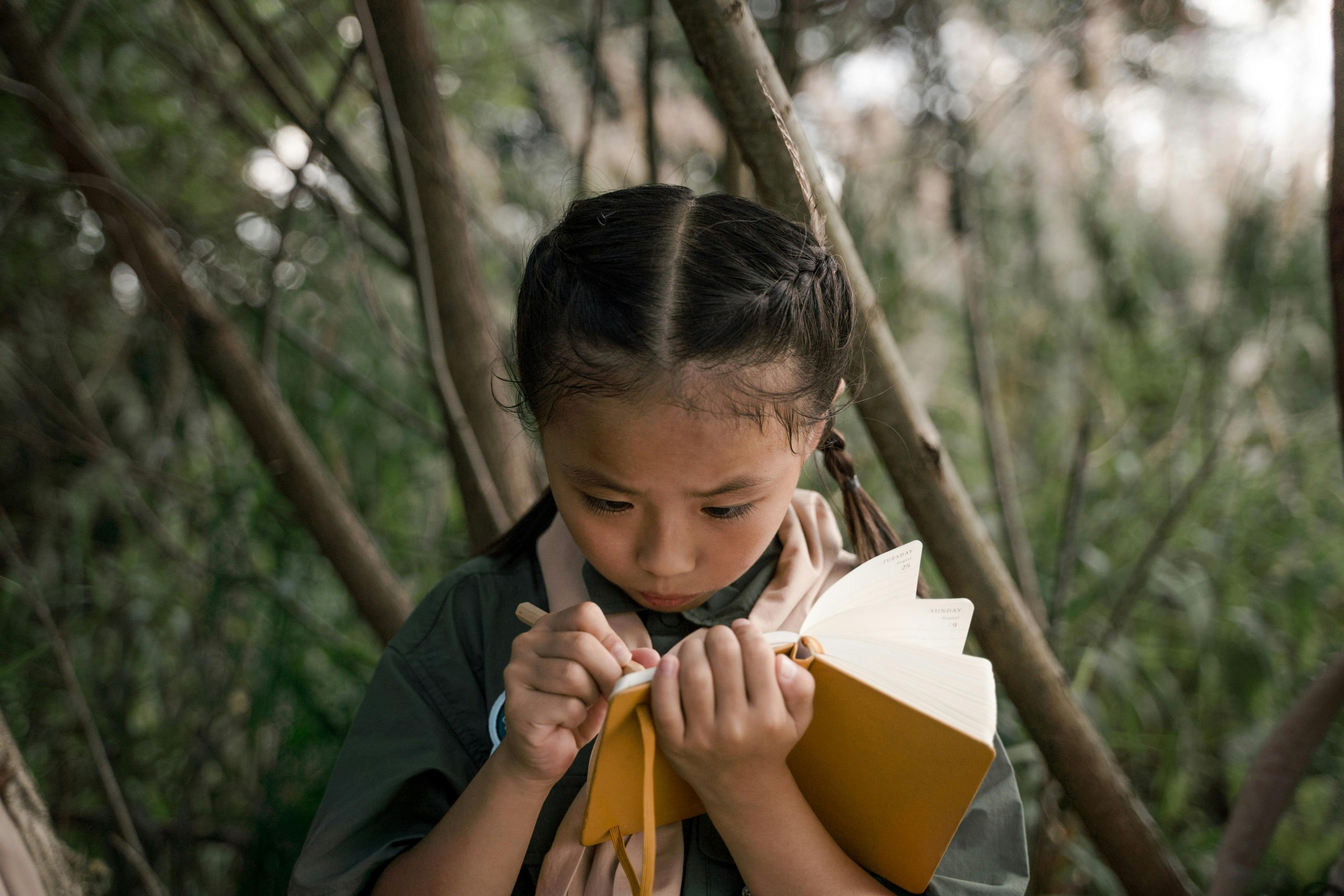
- Nature observation and journaling
- Basic life science (plants, animals, human body)
- Simple physical science (magnets, light, sound)
- Earth science fundamentals (weather, rocks, seasons)
- Scientific process introduction (observation, questioning, testing)
Recommended Approaches:
- Weekly nature study with notebooking
- Unit studies exploring topics in depth
- Simple experiments using household materials
- Read-alouds and living books
- Connections to daily life and experiences
Middle School Science (Grades 6-8)
Middle schoolers shift toward more formal study while keeping hands-on work. This period bridges elementary exploration and rigorous high school courses.
Key Focus Areas:
- Life science (cells, organisms, ecosystems)
- Physical science (matter, energy, forces)
- Earth and space science (geology, astronomy, weather systems)
- Introduction to laboratory skills and safety
- Scientific method application with formal lab reports
Recommended Approaches:
- Systematic curriculum covering major topics
- Regular laboratory experiments with documentation
- Fair participation or independent projects
- Introduction to research and scientific writing
- Preparation for high school course sequence
High School Science (Grades 9-12)
High school courses need rigorous, college-prep work with solid lab parts. Most colleges expect three to four years of lab-based classes.
Typical Sequence:
- Grade 9: Biology or Physical Science
- Grade 10: Chemistry or Biology
- Grade 11: Chemistry or Physics
- Grade 12: Physics, Advanced Biology, or elective science
Key Requirements:
- Laboratory experience documented thoroughly
- College-preparatory rigor and content depth
- Formal lab reports demonstrating scientific methodology
- Appropriate math prerequisites for each course
- Transcript documentation meeting college expectations
Setting Up Your Home Science Lab
You don’t need costly gear to teach science well. Start simple and add supplies as needed.
Basic Supplies for All Ages
- Magnifying glasses and hand lenses
- Measuring tools (rulers, measuring cups, kitchen scale)
- Containers of various sizes (jars, cups, bowls)
- Timer or stopwatch
- Thermometer
- Lab notebook or journal
- Basic craft supplies for models
Middle School Additions
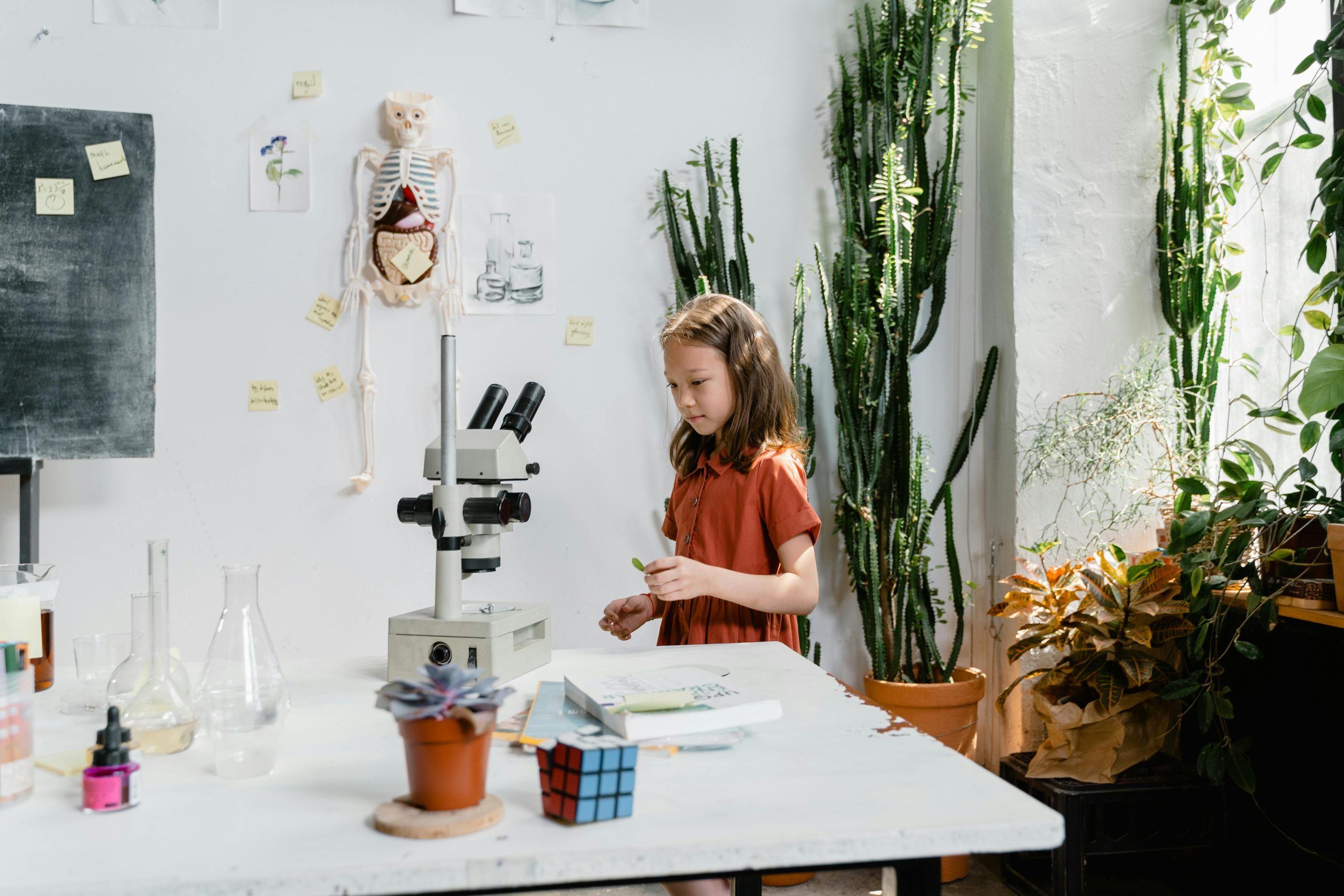
- Basic microscope (40x-400x magnification sufficient)
- Prepared slides and blank slides
- pH paper or litmus strips
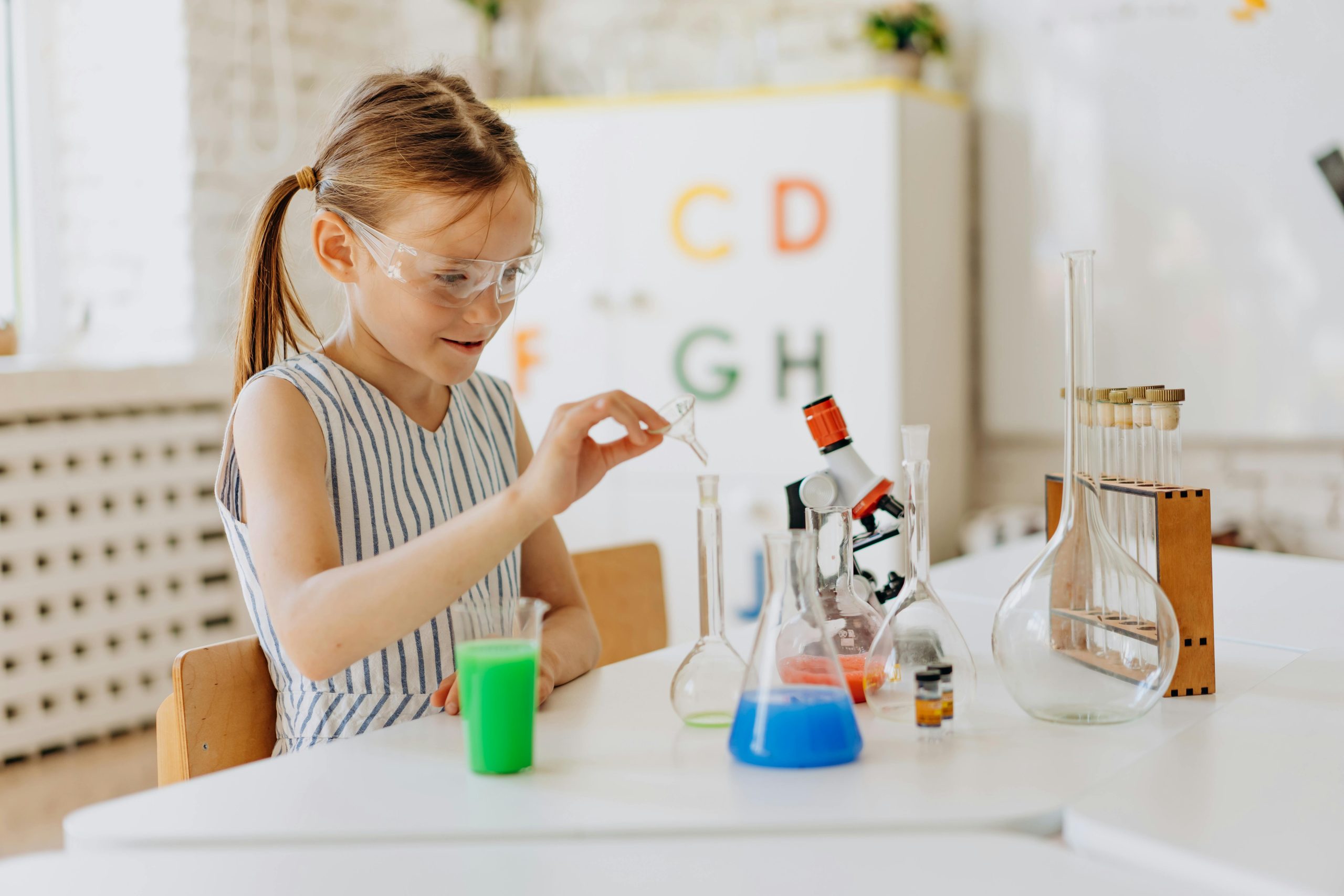
- Simple chemistry supplies (baking soda, vinegar, food coloring)
- Safety goggles
- Lab notebooks with data tables
High School Laboratory Equipment
- Quality microscope (up to 1000x for biology)
- Basic glassware (beakers, graduated cylinders, test tubes)
- Heat source (hot plate or alcohol lamp with supervision)
- Digital scale with 0.1g precision
- Dissection kit and specimens (for biology)
- Circuit components (for physics)
- Appropriate safety equipment
Creating Safe Lab Space
Designate a specific area for science experiments with:
- Easy-to-clean surfaces
- Good ventilation for chemistry work
- Access to water
- Safe storage for supplies and chemicals
- Fire extinguisher accessible
- First aid kit nearby
Making Lessons Engaging
Connect to Real Life
Learning becomes memorable when tied to everyday life. Cook together and discuss chemical reactions. Garden and watch plant life cycles. Track weather and learn about the atmosphere. Visit construction sites and discuss physics. The world provides endless learning chances.
Pursue Student Interests
When children show curiosity about a topic, dive deeper. A love of dinosaurs leads to paleontology, geology, and evolution. Interest in cooking connects to chemistry and nutrition. Space enthusiasm opens astronomy, physics, and engineering talks. Following interests builds lasting love of science.
Include Hands-On Experiences
Students remember what they do more than what they read. Every topic offers chances to experiment:
- Biology: microscopy, dissection, growing cultures, nature observation
- Chemistry: reactions, crystallization, pH testing, mixtures and solutions
- Physics: motion experiments, simple machines, circuits, wave demonstrations
- Earth Science: rock collection, weather monitoring, erosion modeling
Utilize Quality Resources
Supplement your curriculum with engaging resources:
- PhET Simulations for interactive virtual experiments
- Khan Academy for video explanations of concepts
- Library books on scientific topics and scientist biographies
- Museums and nature centers
- YouTube channels featuring experiments and explanations
- Citizen science projects for real research participation
Building Scientific Thinking Skills
Beyond content, this subject also builds critical thinking patterns that serve students for life.
Observation Skills
Scientists notice details others miss. Practice watching through nature journaling, describing objects exactly, and comparing similar items. Ask “What do you notice?” before asking “What do you think?” Build the habit of careful looking.
Questioning Skills
Good questions drive scientific inquiry. Encourage questions beyond “why” to include “what if,” “how could we test,” and “what would change if.” Model curiosity by wondering aloud and investigating together.
Hypothesis Formation
Hypotheses are educated guesses based on prior knowledge. Teach students to make predictions before experiments. Have them explain their reasoning. Wrong predictions offer valuable learning about how evidence changes what we know.
Experimental Design
Understanding variables, controls, and fair testing takes practice. Start simply: “If we want to know whether plants need sunlight, what must we keep the same? What will we change? What will we measure?” Build complexity gradually.
Data Analysis and Interpretation
Collecting data means nothing without smart analysis. Teach students to organize results, look for patterns, spot outliers, and draw evidence-based conclusions. Graphs and charts help show relationships.
Common Challenges and Solutions
“I’m not a science person”
You don’t need a STEM degree to teach these subjects well. Use curriculum with strong teacher support. Watch teaching videos with your child and learn together. Your desire to search for answers models lifelong learning. Many great researchers had parents who knew little about these topics but encouraged curiosity. Resources like NSTA offer great teacher support. The National Center for Education Statistics confirms that homeschooled students often outperform their peers on tests.
Limited Time for Experiments
Teaching doesn’t need fancy experiments daily. Short, focused activities help more than long procedures done poorly. Plan experiments for days with more flexibility. This makes the process fun rather than stressful. Use demo videos when hands-on work isn’t practical. Quality matters more than quantity.
Multiple Ages Learning Together
This subject adapts well to multi-age teaching. Choose topics that interest all, then vary depth of discussion and assignments. Older students can mentor younger siblings. Family learning time builds bonds while covering content.
Meeting High School Requirements
First, document lab work well with photos, detailed notes, and formal lab reports. Then, consider community college courses, co-op classes, or online labs for extra proof. Colleges want to see real lab experience. Home labs can certainly provide this.
Frequently Asked Questions
How much time should I spend on this subject each week?
Elementary students benefit from daily learning moments (nature watching, discussions, simple explorations) plus one to two focused sessions weekly. Middle schoolers typically need two to three hours weekly of structured study. High schoolers need four to five hours weekly for rigorous courses, including lab time.
What if my child doesn’t like this subject?
Resistance often comes from bad past experiences or wrong difficulty level. Try different methods: more hands-on activities, links to interests, living books instead of textbooks, or nature study instead of formal curriculum. Finding the right entry point often changes attitudes.
Can I teach high school courses without a background in this area?
Yes, with the right resources. Choose curriculum made for parent-taught homeschools. Use video lessons and learn alongside your student. Online courses, tutors, and co-op classes give extra support when needed. Your guidance and cheer matter more than your expertise.
How do I document coursework for transcripts and college applications?
Keep detailed records including curriculum used, topics covered, lab experiences, and hours of instruction. Keep a portfolio of lab reports, projects, and achievements. Write course descriptions summing up content and rigor. Consider standardized tests like AP or SAT Subject Tests to prove learning.
Is it better to use an all-in-one curriculum or piece together resources?
All-in-one programs give structure, ensure coverage, and reduce planning load. Pieced-together methods offer flexibility and can match your child’s interests better. Many families use a main curriculum plus added resources. Choose based on your planning time and teaching style.
Getting Started Today
You don’t need perfect plans to start teaching science at home. Try these practical steps:
This Week: Take a nature walk together. Observe, ask questions, and record findings. This simple activity builds scientific habits without any curriculum purchase.
This Month: Choose one science topic your child finds interesting. Find library books, simple experiments, and videos about that topic. Explore together without formal structure.
This Semester: Select a curriculum or approach that fits your family. Establish regular science time. Begin building laboratory supplies gradually.
This Year: Cover major topics appropriate for your child’s level. Document learning through notebooks, portfolios, or reports. Celebrate discoveries and encourage ongoing curiosity.
STEM education at home succeeds through steady attention, real curiosity, and willingness to search for answers together. It doesn’t need costly gear or parent expertise. You have everything you need to raise a child who knows how to ask questions, gather evidence, and draw conclusions. That foundation serves them far beyond any specific content.
The world provides an endless laboratory, and your guidance helps your child learn to see it. Start simple, stay curious, and enjoy the discoveries ahead.

Leave a Reply