
Affiliate Disclosure: This article contains affiliate links. If you purchase through these links, HomeschoolPicks may earn a small commission at no additional cost to you. We only recommend resources we believe in. Last Updated: April 2026.
Last Updated: April 2026
Latin is one of the most distinctive marks of classical homeschooling, and one of the most intimidating. Why teach a “dead” language? When should you start? Which program is best? And what if you, the parent, have never studied Latin yourself? This guide answers all of those questions and gives you a clear path forward.
Quick Answer: Latin builds vocabulary, grammar, mental discipline, and access to Western literature. Start in 3rd grade with a gentle program like Song School Latin or Prima Latina. Parents can learn alongside their children.
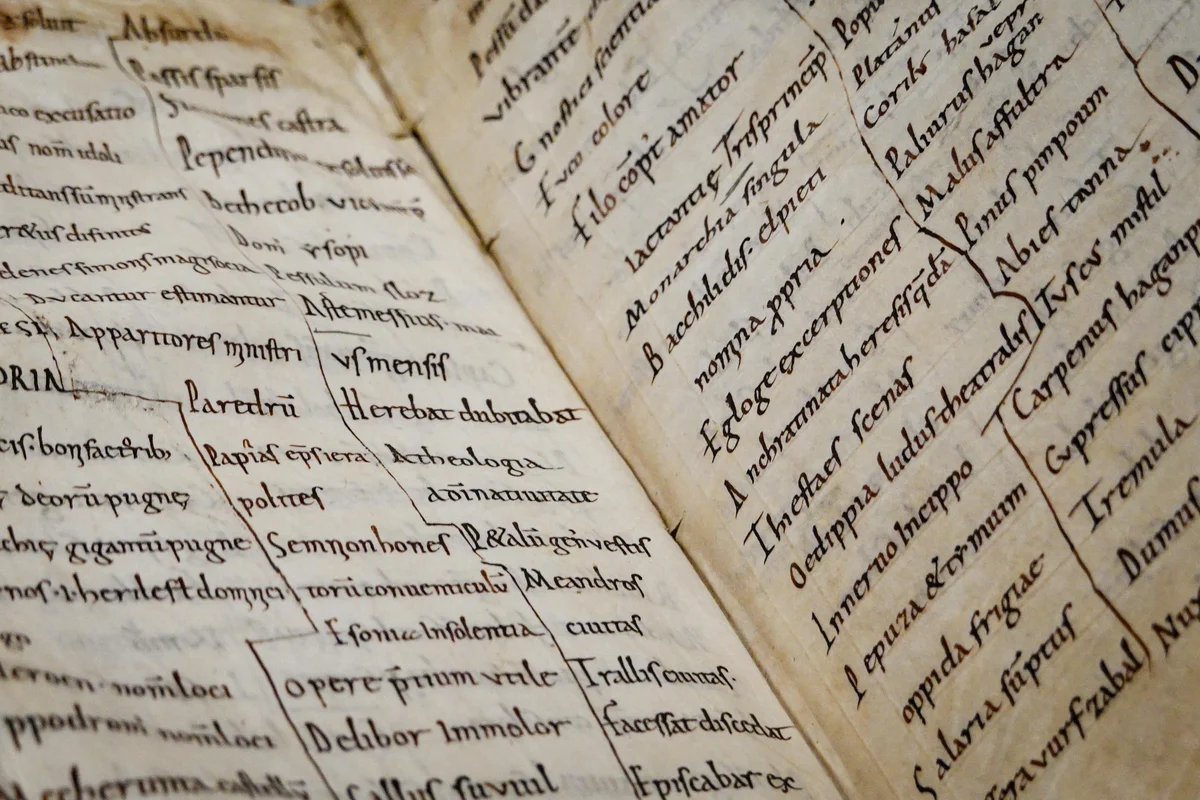
Why Teach Latin?
Classical educators have defended Latin instruction for centuries. According to the CiRCE Institute, the benefits fall into several categories.
1. English Vocabulary
Roughly 60% of English vocabulary derives from Latin, and the percentage rises to 90% in scientific, legal, and academic contexts. Students who study Latin acquire a permanent advantage on the SAT verbal section, in scientific terminology, and in formal writing.
2. English Grammar
Modern English schools rarely teach grammar systematically. Latin forces students to think about case, tense, mood, and voice in a way English never demands. Students who learn Latin almost always end up with better English grammar than students who study only English.
3. Mental Discipline
Latin is famously logical and systematic. Memorizing declensions, parsing sentences, and translating passages train the brain in careful, step-by-step thinking that transfers to math, science, and computer programming.
4. Access to Western Literature
Without Latin, students cannot read Cicero, Virgil, Augustine, Aquinas, Erasmus, or the Latin Vulgate Bible in the original. Translations are useful but always lossy.
5. Foundation for Other Languages
Latin is the parent of French, Spanish, Italian, Portuguese, and Romanian. Students who know Latin learn any romance language in roughly half the time.
When to Start Latin
Most classical educators recommend starting Latin in 3rd grade, around age 8. By that age, children read fluently in English and can handle the additional language load. Some families start with Latin chants in 1st or 2nd grade using Song School Latin review or similar gentle programs.
Older starters do fine. A 6th grader can begin Latin and catch up to peers within two years. Cathy Duffy Reviews consistently observes that older beginners actually move faster through grammar fundamentals than younger children, even if they take longer to master pronunciation.

The Best Latin Programs for Homeschoolers
Elementary (Ages 6-9)
- Song School Latin by Classical Academic Press: Gentle, song-based introduction. Best for ages 6-8. See our full Song School Latin review.
- Prima Latina by Memoria Press: Traditional workbook approach. Best for ages 7-9.
- Latin’s Not So Tough by Greek ‘n’ Stuff: Workbook-based, secular friendly.
Upper Elementary (Ages 9-12)
- Latina Christiana I and II by Memoria Press: Beginning Latin grammar in a clear, traditional format.
- Latin for Children by Classical Academic Press: Engaging, story-based Latin grammar with optional video. See our Latin for Children review.
- First Form Latin by Memoria Press: Best transition from gentle introduction to formal grammar.
Middle and High School
- Second, Third, Fourth Form Latin by Memoria Press: Complete Latin grammar sequence.
- Latin Alive by Classical Academic Press: Reading-focused approach for older students.
- Henle Latin: Traditional Catholic-school Latin used by Classical Conversations Challenge.
- Wheelock’s Latin: College-level Latin, suitable for self-motivated high schoolers.
How to Teach Latin When You Don’t Know It
Most classical homeschool parents have never studied Latin. The good news: modern homeschool Latin programs are explicitly designed for self-teaching parents. Here is how to make it work.
1. Choose a Program with Audio or Video
Programs like Song School Latin, Latin for Children, and First Form Latin include audio CDs or video instruction. The instructor pronounces every word, so neither you nor your child has to guess.
2. Learn One Lesson Ahead
You only need to be one lesson ahead of your child. Read the teacher’s manual the night before, watch the video, and you are ready to teach.
3. Recite Together
Latin is best learned by saying it out loud. Recite paradigms together with your child every day. You will both memorize them faster than you expect.
4. Don’t Worry About Pronunciation Perfection
Both Classical and Ecclesiastical pronunciation are taught in modern programs. Pick one, be consistent, and don’t stress.
5. Use Online Communities
The Well-Trained Mind forums and Memoria Press users groups are full of parents in your exact situation. Ask questions; the community is generous.

How Much Latin Should You Aim For?
Realistic goals for homeschool Latin:
- Elementary: Vocabulary, basic noun and verb forms, simple sentences
- Middle school: Complete grammar (5 declensions, 4 conjugations), simple translations
- Early high school: Reading adapted Latin (Caesar’s Gallic Wars in adapted form)
- Late high school: Reading authentic Latin (Cicero, Virgil, Vulgate)
Not every family needs to reach the high school targets. Many classical families teach Latin only through middle school for the vocabulary and grammar benefits, then switch to a modern language for high school credit.
Common Latin Teaching Mistakes
- Skipping daily review. Latin requires daily practice. Three days a week is not enough.
- Translating into English too soon. Read Latin as Latin first; translate as a check, not the goal.
- Switching programs every year. Pick one and stick with it for at least three years.
- Pronunciation perfectionism. Don’t let fear of saying it wrong stop you from saying it.
- Teacher burnout. Schedule short Latin sessions (15-20 minutes) rather than long ones.
Latin in the Trivium
Classical educators integrate Latin with the the trivium framework stages:
- Grammar stage: Memorize vocabulary, declensions, conjugations
- Logic stage: Parse sentences, analyze syntax, translate carefully
- Rhetoric stage: Read original authors, analyze style, write in Latin
A Closer Look at Implementation
One of the most useful things newer homeschoolers can do is to look beyond the marketing and curriculum brochures and consider how a real classical week unfolds in practice. Many families discover that the gap between curriculum theory and daily reality is wider than they expected, and that small adjustments can make the difference between a flourishing year and a frustrating one.
Successful classical homeschoolers tend to share several common rhythms. They protect a consistent morning block when minds are freshest, save more independent work for afternoons, and weave reading aloud into transitions like meals or bedtime. They also resist the temptation to compare their daily progress to other families’ Instagram feeds. Two homes following the exact same curriculum will look quite different, and that is normal.
Daily Rhythm vs. Strict Schedule
Charlotte Mason famously preferred “habits” to “rules,” and the principle applies here. Rather than scheduling every minute, set a few non-negotiables: morning prayer or memory time, math before lunch, daily read-aloud before bed. Around those anchors, the rest of the day can flex with energy levels, weather, and the unexpected interruptions of family life.
The Three-Year Test
Veterans of classical homeschooling often say that any new approach deserves at least three years before judgment. Year one is the learning curve, year two is the adjustment, and year three is when the long-term benefits begin to show. Families who switch curricula every twelve months rarely see the deeper fruits of any single approach.
Building Your Personal Rule of Life
Many classical educators borrow from monastic tradition the idea of a “rule of life,” a written set of commitments that orders daily practice. For homeschool families, a simple rule might include: read aloud daily, recite memory work three times per week, study Latin four days per week, take Friday afternoons off for nature, attend a co-op weekly. Writing it down and reviewing it monthly keeps families honest without becoming legalistic.
Common Pitfalls and How to Avoid Them
Even experienced classical homeschoolers fall into predictable traps. Awareness of these pitfalls is the first defense.
- Over-purchasing in year one. New classical families often spend hundreds of dollars on resources they will never use. Buy minimal materials at first, then add only what proves necessary.
- Skipping the read-aloud. When the day gets busy, the read-aloud is often the first thing dropped. This is exactly backwards: it should be the last thing dropped.
- Treating Latin as optional. Latin done inconsistently is little better than no Latin at all. Better to do 15 minutes daily than 90 minutes once a week.
- Comparing to public school benchmarks. Classical pacing is different. Some subjects pull ahead, others lag, and the integrated whole rarely matches state standards perfectly.
- Forgetting to discuss. Reading without conversation produces silent learners. Even 10 minutes of “what did you think about that chapter?” makes a difference.
- Burnout from perfectionism. No family does classical perfectly. Aim for faithful, not flawless.
Adapting for Different Learners
Classical methods are flexible enough to accommodate most learning styles when adapted thoughtfully. A child who struggles with handwriting can give oral narrations. A child with reading difficulties can listen to audiobook versions of classics. A wiggly kinesthetic learner can recite memory work while jumping on a trampoline. The classical framework is robust; the daily expression of it should bend to fit the child.
Children with significant learning differences may need modifications. Memoria Press in particular has been praised by families with dyslexic students for its clarity, repetition, and systematic phonics. ADHD-affected students often thrive with shorter lessons, frequent breaks, and movement-friendly memory work. Gifted students may compress the lower stages and reach high school great books a year or two early.
What Year Two Often Looks Like
Many homeschoolers report that year two is when classical education starts to “click.” The parent has a year of experience, the child knows the rhythms, and the curriculum’s deeper structure begins to reveal itself. Specific markers of a healthy year two include:
- The child voluntarily picks up a book to read
- Memory work surfaces in unexpected conversations
- Latin vocabulary helps with English words
- History from year one connects to year two reading
- The parent feels more confident planning ahead
If year two does not show these signs, it may be worth evaluating whether the chosen curriculum is the right fit for your family. Many families switch programs at the year-two mark and find better alignment with their second choice.
How Classical Builds Character
One often-overlooked benefit of classical education is its consistent attention to character formation. Reading Plutarch’s Lives exposes children to historical figures who chose courage over comfort. Discussing the moral choices in Charlotte’s Web or The Lion, The Witch and the Wardrobe teaches children to evaluate behavior thoughtfully. Memorizing Scripture or classic poetry plants wisdom in the heart that surfaces later in life.
This is not the same as moralism or preaching. Classical character formation works through immersion in good stories told well, not through lectures. Children naturally absorb the values of the books they love. Choose books carefully, and the character work happens naturally.
Frequently Asked Questions
Is Latin really useful for modern kids?
Yes. The vocabulary, grammar, and discipline transfer to English, science, law, and modern languages. Latin students consistently score higher on standardized tests according to multiple studies.
Should I do Latin or Spanish?
Many classical families do both. Latin in elementary and middle school for the foundational benefits, then add Spanish or French in high school. Latin makes the second language easier, not harder.
What if my child hates Latin?
Try a different program. Song School Latin’s playful approach works for kids who refuse traditional workbooks. If after two programs and a year of effort it still fails, consider switching to Greek or another language.
Can I teach Latin without a curriculum?
Not effectively. Latin requires a structured progression. Free online resources like Memrise help with vocabulary but cannot replace a real curriculum.
How long does Latin take per day?
15-30 minutes daily for elementary, 30-45 minutes for middle school, 45-60 minutes for high school.
Getting Started Today
- Choose a program based on your child’s age (see above).
- Order the curriculum and any accompanying audio or video.
- Set a consistent daily time, ideally first thing in the morning.
- Recite together. Both parent and child learn out loud.
- Stay consistent for at least one full year before evaluating.
Final Thoughts
Latin is not magic, but it is one of the best investments classical homeschoolers can make. It rewards consistent effort with lifelong benefits in vocabulary, grammar, and disciplined thinking. Start small, stay consistent, and trust the process.
For specific program reviews, see Song School Latin review and Latin for Children review. For broader context, read our classical education beginner’s guide and best classical curriculum guides.


Leave a Reply