

Disclosure: This post may contain affiliate links. If you purchase through these links, we may earn a small commission at no extra cost to you. We only recommend products we believe in.
Feeling overwhelmed about how to start homeschooling? You’re not alone. Every year, over 300,000 new families make the decision to educate their children at home. In my 8+ years of working with homeschool families, I’ve seen nearly all of them start exactly where you are now—wondering if they could really do this.
Here’s the good news: you absolutely can. Homeschooling is legal in all 50 states, and you don’t need a teaching degree to give your child an excellent education. What you need is simply a clear roadmap, some practical guidance, and the confidence to take that first step.
This complete guide walks you through everything you need to know to start homeschooling. Specifically, we’ll cover your state’s legal requirements, choosing curriculum, and creating your first daily schedule. Whether you’re considering homeschooling for the first time or preparing to withdraw your child from public school, you’ll find actionable steps you can take today.

Is Homeschooling Right for Your Family?
Before diving into the logistics, let’s address a common concern. Homeschooling isn’t for everyone, and that’s okay. However, if you’re reading this guide, something has drawn you toward this educational path. That instinct is worth exploring.
Parents choose to homeschool for many different reasons. Understanding your “why” will help you stay motivated during challenging days. Here are some common motivations that I’ve seen firsthand:
- Academic concerns – Your child is ahead or behind grade level, and traditional school can’t meet their needs
- Flexibility – Your family travels, has unique scheduling needs, or wants more quality time together
- Learning differences – Your child has ADHD, dyslexia, or other needs that require personalized attention
- Values alignment – You want to incorporate religious instruction or specific worldviews into daily learning
- Social concerns – Bullying, peer pressure, or school safety issues have impacted your child
- Health reasons – Chronic illness, anxiety, or other conditions make traditional school attendance difficult
There’s no wrong reason to homeschool. What matters is whether you’re willing to commit to your child’s education. You’ll need to create an environment where they can thrive. Many successful homeschool families started with significant doubts. They figured things out along the way, and you will too.
Reality check: Homeschooling requires time, patience, and intentional effort. It doesn’t require perfection. In fact, some of the best learning happens when things don’t go according to plan. Give yourself permission to learn alongside your child.
Proven Benefits of Homeschooling
After working with homeschool families for over 8 years, I’ve seen these benefits play out consistently. Research backs up what families experience firsthand:
- Academic achievement – Homeschooled students typically score 15-30 percentile points higher than public school students on standardized tests, according to multiple peer-reviewed studies.
- Customized learning pace – Your child can move faster in subjects they’ve mastered and take more time where they need it. No more being held back or left behind.
- Stronger family bonds – Spending intentional time together strengthens relationships. Parents and children often report closer connections after homeschooling.
- Efficient instruction – One-on-one teaching takes a fraction of the time classroom instruction requires. What takes 6 hours in school often takes 2-3 hours at home.
- Flexible scheduling – Travel during off-peak times, accommodate medical appointments, and build education around your family’s life rather than the reverse.
- Safe learning environment – Eliminate concerns about bullying, negative peer pressure, or school safety issues while your child learns.
- Character development – You control the values, work ethic, and character traits being modeled and taught throughout the day.
Troubleshooting Common Homeschool Challenges
Let’s be honest—homeschooling isn’t without challenges. However, every challenge has a solution. Here’s what you might face and exactly how to handle it:
Challenge: Feeling overwhelmed by curriculum choices
Solution: First, start with just math and language arts from a single provider. Don’t try to research everything at once. Instead, add subjects gradually as you gain confidence.
Challenge: Resistance from your child
Solution: Additionally, build in breaks, incorporate their interests, and remember that adjustment takes time. Moreover, if a specific curriculum isn’t working, it’s okay to try something different.
Challenge: Balancing multiple children
Solution: For this situation, use independent work for older children while you teach younger ones. Similarly, combine subjects like history and science across age levels when possible.
Challenge: Dealing with criticism from family or friends
Solution: Above all, you don’t need to justify your decision to everyone. Simply keep responses brief and confident. Results will speak for themselves over time.
Challenge: Maintaining motivation on hard days
Solution: Most importantly, connect with other homeschool families who understand. Also, take mental health days when needed. Always remember why you started in the first place.
Understanding Your State’s Homeschool Laws
Homeschooling is legal throughout the United States. However, regulations vary significantly by state. Some states have minimal oversight. Others require testing, portfolio reviews, or notification to local school districts. Knowing your state’s requirements is essential before you begin.
For a comprehensive overview of which states offer the most flexibility, check out our guide to the easiest states to homeschool in.
What Most States Require
While specific requirements differ, here are the most common elements you may encounter:
- Notification – Informing your school district or state that you’re homeschooling
- Required subjects – Teaching specific subjects like math, reading, and sometimes health or citizenship
- Record keeping – Maintaining attendance records, samples of work, or curriculum plans
- Assessment – Standardized testing, portfolio reviews, or professional evaluations at intervals
- Compulsory attendance ages – Understanding when your child must be in school by law
The Home School Legal Defense Association (HSLDA) maintains detailed information on every state’s homeschool laws. Before you begin, research your specific state’s requirements carefully. This research takes about an hour and prevents headaches later.
State Regulation Levels
States are typically categorized by their level of homeschool regulation:
- No-notice states – Arizona, Texas, and others require no notification at all
- Low-regulation states – Require notification but have minimal ongoing oversight, like California and Georgia
- Moderate-regulation states – Require notification and sometimes annual testing or evaluation, such as Colorado and Virginia
- High-regulation states – Require approval, testing, professional evaluations, or curriculum approval (New York, Pennsylvania, Massachusetts)
Don’t let regulations intimidate you. Even states with more requirements have thousands of successful homeschool families. The paperwork becomes routine once you understand what’s needed. Many homeschool veterans say the first year’s paperwork is the hardest. After that, you develop a system that works.
Step-by-Step: How to Start Homeschooling
Now let’s get practical. Here’s your step-by-step roadmap to begin homeschooling. First, follow these steps in order, and you’ll have a solid foundation for your homeschool journey. Then, adjust as you learn what works best for your family.
Step 1: Research Your State’s Legal Requirements
Visit your state’s department of education website and HSLDA’s state page to understand exactly what’s required. Note deadlines for notification, required subjects, and any assessment requirements. We’ve created detailed guides for every state, including popular destinations like Florida, Ohio, and North Carolina.
Create a simple checklist of everything you need to complete before starting. Include deadlines and required forms. Having this checklist visible will keep you on track during the planning process.
Step 2: Notify Your School District (If Required)
If your state requires notification, submit the appropriate paperwork. This typically involves:
- A letter of intent to homeschool (templates are available online)
- Basic information about your child and the teaching parent
- Sometimes a curriculum outline or educational philosophy statement
Keep copies of everything you submit. Send notifications via certified mail if you want confirmation of receipt. This documentation protects you if questions arise later. I’ve learned through experience that thorough documentation saves countless headaches down the road.
Step 3: Withdraw Your Child from School (If Currently Enrolled)
If your child is currently in public or private school, you’ll need to formally withdraw them. Contact the school’s main office and request the withdrawal process. Some schools require a meeting while others accept a simple letter.
Don’t worry about explaining your reasons in detail. A simple statement that you’re withdrawing your child to homeschool is sufficient. Schools cannot legally deny your right to homeschool. Be polite but firm if you encounter resistance.
Step 4: Choose Your Homeschool Approach
One of homeschooling’s greatest strengths is flexibility. There’s no single “right way” to homeschool. Consider these popular approaches to find one that resonates with your family’s values and learning style:
- Traditional/School-at-Home – Uses textbooks and workbooks similar to traditional school. Great for families who want structure and clear expectations.
- Classical Education – Emphasizes the trivium (grammar, logic, rhetoric) and great books. Develops critical thinking skills through language and logic.
- Charlotte Mason – Focuses on living books, nature study, and short lessons. Emphasizes character development and the love of learning.
- Montessori – Child-led learning with hands-on materials and self-paced work. Encourages independence and intrinsic motivation.
- Unschooling – Interest-led learning without formal curriculum. Trusts children’s natural curiosity to guide their education.
- Eclectic – Mix-and-match approach combining elements from various methods. Most flexible and customizable option.
Most new homeschoolers start with something more structured. They adjust as they learn what works for their family. There’s no shame in trying different approaches until you find your fit. Many experienced homeschoolers use an eclectic blend that evolves over time.
Step 5: Select Your Curriculum

Curriculum selection can feel overwhelming with thousands of options available. Here’s a systematic approach to narrow it down:
- Identify your priorities – Do you want a complete package or separate subjects? Secular or religious? Teacher-intensive or independent?
- Consider your child’s learning style – Visual learners need different resources than hands-on learners. Observe how your child naturally learns best.
- Set a realistic budget – Curriculum costs range from free to thousands of dollars. Many excellent options exist at every price point.
- Read reviews – Check sites like Cathy Duffy Reviews for detailed curriculum analysis from experienced homeschoolers.
- Start simple – You don’t need everything at once. Begin with core subjects (math, language arts, reading) and add from there.
Popular comprehensive curriculum options for beginners include Sonlight, My Father’s World, Oak Meadow, BookShark, and Time4Learning (online). Each has different strengths. Research which aligns with your family’s needs and teaching style.
Step 6: Create a Learning Space
You don’t need a dedicated classroom, but having an organized space helps everyone stay focused. Consider these elements:
- A consistent spot for focused work (kitchen table, spare room, or a corner of the living room)
- Storage for books and supplies that’s easily accessible to your child
- Good lighting and minimal distractions during lesson time
- Comfortable seating that works for your child’s needs and preferences
Many homeschool families work at the kitchen table, on the couch, outdoors, or in different locations throughout the day. Flexibility is part of the beauty of home education. Some children focus better standing at a counter or lying on the floor. Experiment to find what works for your unique situation.
Step 7: Establish a Routine (Not a Rigid Schedule)
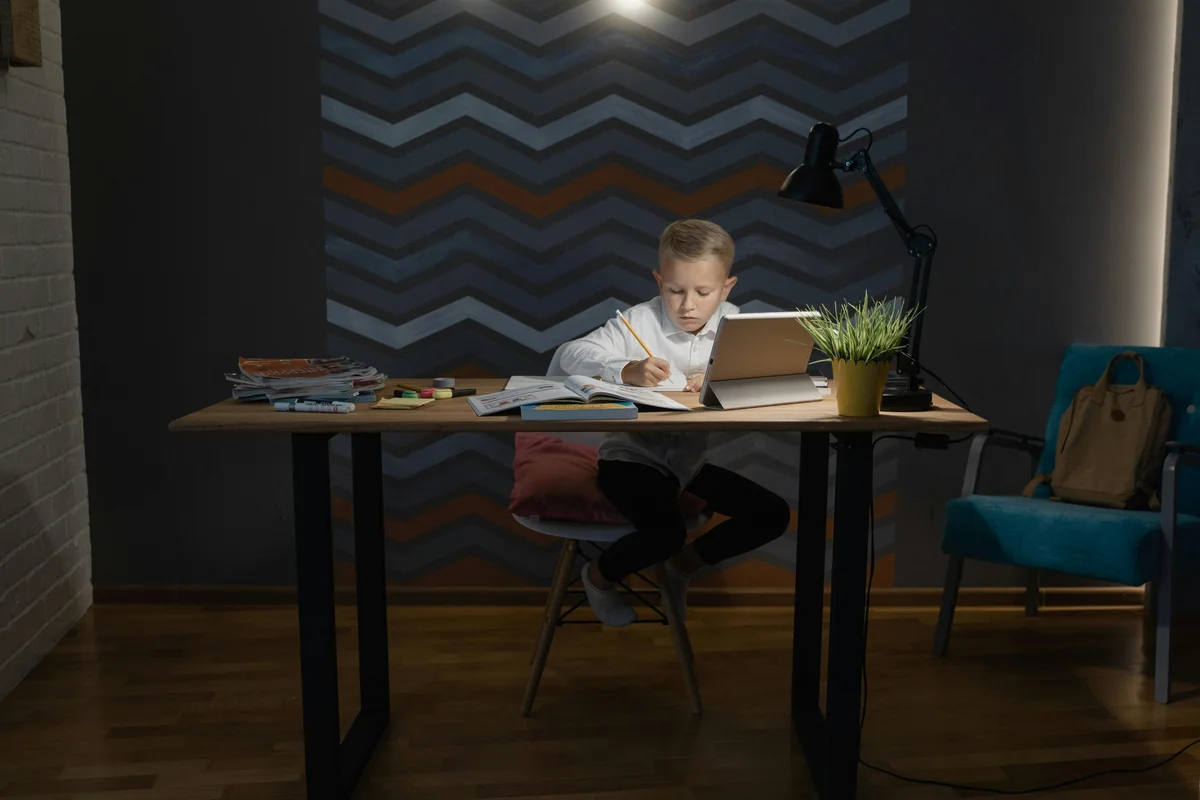
Structure helps children thrive. However, homeschool schedules don’t need to mirror traditional school. Consider building your routine around these elements:
- Wake-up and morning routine – A consistent start time helps set daily expectations and creates rhythm
- Core subjects first – Tackle math, reading, and writing when your child is freshest and most alert
- Built-in breaks – Short breaks between subjects improve focus, retention, and overall attitude
- Flexibility for real life – Doctor appointments, errands, and spontaneous learning opportunities will happen
A typical elementary homeschool day might run 2-4 hours of focused instruction. Middle school might require 3-5 hours. High school could need 4-6 hours. This is significantly less than traditional school because you’re not dealing with classroom management, transitions between classrooms, and waiting for other students to catch up.
Step 8: Connect with Other Homeschoolers
Finally, homeschooling doesn’t mean isolation. In fact, building community makes homeschooling more enjoyable for both parents and children. Seek out connections through:
- Local homeschool co-ops – Groups that meet regularly for classes, field trips, and social activities
- Sports leagues and extracurriculars – Many areas have homeschool-specific sports teams, drama groups, and activities
- Online communities – Facebook groups, forums, and social media connect homeschoolers nationwide
- Support groups – Local networks for parent encouragement, resource sharing, and lasting friendship
Your local library is often a great resource for finding homeschool groups in your area. Many libraries offer homeschool-specific programs and can connect you with other families. Don’t hesitate to reach out to established homeschoolers. Most are happy to help newcomers navigate the early stages.
Planning Your First Week of Homeschooling
Your first week doesn’t need to be perfect. In fact, keeping expectations realistic will help everyone adjust smoothly. Here’s a suggested approach for that important first week:
Day 1: Start with just one or two subjects. Focus on math and reading. Keep lessons short and end on a positive note to build momentum.
Days 2-3: Next, add another subject or two. Pay close attention to your child’s energy levels and attention span. Adjust timing as needed.
Days 4-5: Then, implement your full routine. Note what works well and what doesn’t. This valuable information will guide the weeks ahead.
Keep a simple journal during this first week. Write down what went well and what needs adjustment. These notes will guide your improvements over time. Remember, every homeschool family went through this adjustment period. It gets smoother with practice.
What About Socialization?
This is the question every homeschool parent hears repeatedly. Let’s address it directly with facts rather than assumptions.
“Socialization” concerns typically stem from the assumption that children need same-age peers in a classroom setting to develop social skills. However, research and real-world experience consistently show this isn’t accurate.
Homeschooled children have abundant opportunities for socialization through:
- Co-ops and homeschool group activities with peers of various ages
- Sports teams, dance classes, music lessons, and other extracurricular activities
- Church, community groups, and volunteer opportunities
- Neighborhood friendships and regular playdates
- Interaction with adults and people of all ages in real-world settings
Many educators argue that homeschooled children actually receive better socialization. They interact with people of various ages in authentic settings. This contrasts with spending most of their time exclusively with same-age peers in artificial classroom environments.
Research from the National Home Education Research Institute consistently shows that homeschooled students perform well in college and careers. They demonstrate strong social skills, adaptability, and self-confidence. The socialization question has been thoroughly studied and answered.
Record Keeping Made Simple
Good record keeping protects you legally and helps track your child’s progress over time. Here’s a simple system that works for most families:
What to keep:
- Attendance records (a simple calendar with checkmarks works perfectly)
- List of curriculum and resources used each year
- Work samples from each subject (monthly selections are usually sufficient)
- Reading logs with book titles and dates completed
- Any test results or professional evaluations
How to organize effectively:
- Use a binder with dividers for each subject
- Keep digital backups of important documents in cloud storage
- Date everything consistently for easy reference
- Review and organize quarterly to prevent overwhelming backlogs
Check your state’s specific requirements for record keeping. Some states need more documentation than others. When in doubt, keep more records than you think you need. You can always discard them later, but you can’t recreate them.
Common Mistakes New Homeschoolers Make
Learning from others’ experiences can save you frustration. Here are common pitfalls to avoid:
1. Trying to Replicate School at Home
You don’t need to run a 7-hour school day with bells and rigid schedules. Embrace the efficiency and flexibility that homeschooling offers. One-on-one instruction is far more efficient than classroom teaching. Your homeschool will look different from traditional school, and that’s actually a good thing.
2. Buying Too Much Curriculum
It’s tempting to purchase everything that looks interesting. Homeschool conferences and curriculum sales can be overwhelming. Start with essentials and add resources as you identify actual needs. Buy used when possible. You can always purchase more later after you know what works.
3. Comparing to Other Homeschoolers
Every family’s homeschool looks different. What works for one family may not work for yours, and that’s perfectly fine. Avoid the comparison trap, especially on social media. Focus on your child’s progress, not someone else’s highlight reel.
4. Neglecting Your Own Self-Care
Homeschooling is rewarding but demanding. Build in time for yourself regularly. Don’t feel guilty about needing breaks. A refreshed parent is a better teacher. Consider scheduling regular personal time, just as you schedule lessons.
5. Giving Up Too Soon
The first weeks and months involve significant adjustment for everyone. Give yourself and your child time to settle into this new way of learning. Most homeschool families say it takes a full semester to find their groove. I’ve personally witnessed families who struggled in September become confident and thriving by January. Commit to trying for at least one full year before making any final decisions about whether homeschooling works for your family.
How Much Does Homeschooling Cost?
Homeschooling costs vary dramatically based on your choices. Here’s a realistic breakdown to help with budgeting:
Budget-friendly approach: $200-500/year per child
- Library books and free online resources (Khan Academy, PBS LearningMedia)
- Used curriculum from homeschool sales and Facebook groups
- Basic supplies from dollar stores and discount retailers
Moderate approach: $500-1,500/year per child
- Mix of new and used curriculum materials
- One or two online courses or co-op classes
- Some extracurricular activities included
Premium approach: $1,500-5,000+/year per child
- Full curriculum packages purchased new
- Online school or accredited programs
- Multiple extracurriculars, sports, and private lessons
- Educational travel and enrichment field trips
Remember that homeschooling often saves significant money compared to private school tuition. Free resources abound. Your public library, Khan Academy, YouTube educational channels, and countless websites offer quality educational content at no cost. Quality homeschooling doesn’t require a large budget—it requires intentionality.
How to Know If Homeschooling Is Working
Assessment looks different in homeschool than in traditional school. Here are signs that your homeschool is succeeding:
- Your child is making progress, even if it’s gradual
- They’re developing curiosity and asking good questions
- Learning feels less like a battle over time
- Your child can explain concepts in their own words
- You see application of learning in everyday situations
- Your relationship with your child is strengthening, not straining
If you need formal assessment, options include standardized tests, portfolio reviews, and professional evaluations. Many homeschool families use annual testing to satisfy legal requirements and track academic progress objectively.
Frequently Asked Questions
Do I need a teaching degree to homeschool?
No. In most states, there are no educational requirements for homeschool parents. You know your child better than anyone. Curriculum materials are designed to guide parents through the instruction process step by step. A teaching degree can be helpful but is absolutely not necessary for successful homeschooling.
What if my child has special needs?
Many families homeschool children with ADHD, dyslexia, autism, and other learning differences with great success. Homeschooling allows you to customize instruction, pace, and environment to your child’s specific needs. Research special needs homeschool curriculum and support groups for targeted guidance and community support.
Can I homeschool if I work full-time?
Yes, though it requires creativity and planning. Options include homeschooling during non-traditional hours, using online school or self-paced curriculum, sharing teaching duties with a spouse or family member, or working from home with a flexible schedule. Many working parents successfully homeschool with proper planning and realistic expectations.
How will my child get into college?
Homeschooled students are accepted at colleges and universities nationwide, including Ivy League schools. Admissions typically require transcripts (which you create), standardized test scores (SAT/ACT), and application essays. Many colleges actively recruit homeschoolers for their self-motivation, unique perspectives, and strong work ethic.
What about high school credits and transcripts?
As the homeschool parent, you serve as the administrator who awards credits and creates transcripts. Resources exist to help you understand credit requirements and create professional transcripts. Some families use accredited programs for high school to simplify the college application process and provide additional credibility.
Your First Steps Start Today
In summary, starting homeschooling might feel like standing at the base of a mountain. Remember this: you don’t have to climb it all at once. Every successful homeschool family started with a single step. Most will tell you they wish they’d started sooner. In my experience helping families through this process, the ones who succeed are those who simply begin, even imperfectly.
Here’s what you can do right now:
- Research your state’s laws at HSLDA.org or browse our state-by-state homeschool guides
- Connect with local homeschoolers – Search Facebook for “[Your City] homeschool” groups
- Browse curriculum reviews at Cathy Duffy Reviews to start exploring options
- Make a list of questions you still need answered
- Set a target start date – Having a specific goal helps you move forward with purpose
You have everything you need to give your child an excellent education. You have love for your child, commitment to their success, and the willingness to learn alongside them. The curriculum, methods, and routines are all learnable. What matters most is showing up every day with intention.
Welcome to the homeschool community. You’ve got this, and we’re here to help you succeed on your homeschool journey.



Leave a Reply