

After homeschooling three kids over the past decade—including one with ADHD and another who’s gifted—I’ve made nearly every mistake in the book. Some lessons came easy while others took years to learn. But here’s the good news: you don’t have to repeat my errors. By understanding the most common homeschooling mistakes families make, you can skip the frustration and focus on what actually matters—your child’s education and your family’s sanity.
Studies show that approximately 3.7 million students are homeschooled in the United States, and that number continues to grow annually. According to the U.S. Census Bureau’s 2026 Household Pulse Survey, homeschooling has increased by nearly 50% since 2019. With more families choosing this educational path, understanding what doesn’t work is just as important as knowing what does.
New homeschool families often stumble into the same pitfalls that experienced parents have already navigated. These homeschooling mistakes aren’t signs of failure—they’re part of the learning curve. But knowing about them beforehand can save you months of struggle and help you build confidence faster. If you’re just starting out, be sure to check out our first year homeschooling survival guide for month-by-month tips.
Quick Summary: The biggest homeschooling mistakes include buying too much curriculum, trying to replicate school at home, comparing your kids to others, neglecting self-care, and expecting perfection from day one. Focus on your own family’s needs, stay flexible, and remember that homeschooling is a marathon, not a sprint.
The Scope and Impact of Common Homeschooling Mistakes
Before we dive into specific mistakes, you’ve got to understand their scope and potential consequences. These aren’t minor inconveniences—they can have real disadvantages that’ll affect your entire homeschool experience. The key features of effective homeschooling include flexibility to customize schedules, the ability to personalize curriculum to your child’s needs, and strengthening family bonds through shared learning. When mistakes interfere with these benefits, the disadvantages multiply quickly.
Common homeschooling mistakes typically fall into three categories: planning and preparation errors (like buying too much curriculum or ignoring state laws), mindset and expectations issues (like comparison or perfectionism), and ongoing management challenges (like over-scheduling or inflexibility). Understanding this scope helps you recognize where you’re most likely to stumble. A proper evaluation of your homeschool setup every few months can catch these issues before they derail your progress.
1. Buying Too Much Curriculum (Curriculum Overload)
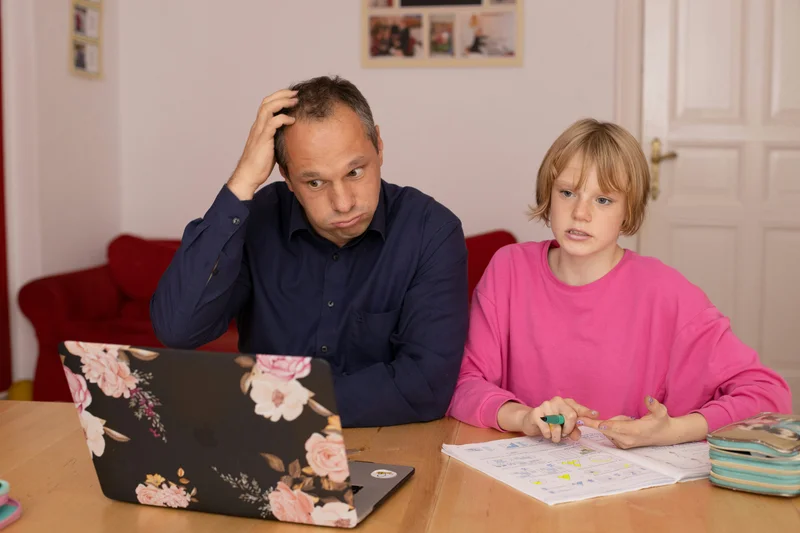
This is probably the single most expensive homeschooling mistake new families make. During my first year, I spent over $800 on curriculum before my kids touched a single workbook. Half of it ended up sitting unused on our shelves for years.
Sound familiar? The temptation to buy everything looks different for everyone. Maybe you’re worried about gaps in your child’s education. Perhaps that shiny new curriculum looks amazing and you can’t imagine not having it. Or maybe you’ve bought three different math programs because you weren’t sure which one would work best for your learner.
How to Avoid Curriculum Overload
Here’s how to avoid this costly mistake:
- Start with just the basics: math, language arts, and reading materials (see our essential supplies list)
- Borrow curriculum from your library or homeschool co-op before buying
- Use free trials and samples before committing to expensive programs
- Wait until mid-year to add extra subjects
- Remember that less is often more, especially in the early grades
According to HSLDA’s homeschool resources, families typically spend $300-$600 per child annually on curriculum—not thousands. Start small and add as needed. For more tips on keeping costs manageable, see our guide to homeschooling on a budget.
2. Trying to Recreate School at Home
I distinctly remember setting up desks, buying a teacher’s bell, and creating a rigid six-hour schedule for our first day. By noon, everyone was in tears. We weren’t running a school—we were fighting against everything that makes homeschooling work. Many experienced homeschoolers recommend a “deschooling” period when transitioning from traditional school—typically one month for every year your child attended public school. This adjustment time helps everyone shift away from institutional expectations. According to a 2024 study published in the Journal of School Choice, families who allow for deschooling time report 60% higher satisfaction with their homeschool experience in year one.
One of the most liberating realizations for new homeschoolers is that you’re not running a miniature public school. Truth is, you don’t need desks, bells, or eight-hour days. What works in a classroom of 25 kids doesn’t necessarily work for your family of three. For a deeper comparison of these approaches, read our guides on homeschooling vs public school and homeschooling vs private school.
What to Do Instead
Instead of fighting against your home’s natural advantages, embrace them:
- Elementary students typically need only 2-3 hours of focused instruction daily for age-appropriate expectations
- Let your child’s natural rhythms guide your schedule
- Use the couch, kitchen table, backyard, or library as your classroom
- Build in movement breaks and outdoor time
- Learning happens everywhere, not just at a desk
3. Comparing Your Children to Public School Students
Does this sound like you? The comparison trap catches almost every homeschool parent at some point. Your neighbor’s kindergartener is reading chapter books while yours is still working on letter sounds. Your sister’s fifth grader just won a math competition while your child’s struggling with multiplication tables. It’s exhausting—and completely counterproductive.
Here’s what I wish someone had told me: comparison is one of the most destructive homeschooling mistakes you can make. Every child develops at their own pace, and homeschooling gives you the freedom to honor that pace rather than force artificial timelines.
Research from the National Home Education Research Institute consistently shows that homeschooled students perform well academically regardless of when they hit specific milestones. Their data shows homeschoolers typically score 15-30 percentile points higher than public school students on standardized tests—regardless of when they started reading or doing math. In other words, a child who reads at 8 instead of 5 often catches up completely by middle school.
4. Neglecting Your Own Self-Care
I spent my first two years of homeschooling running on empty. Every moment focused on the kids, the curriculum, the schedule—everything except myself. By year three, I was burned out and seriously considering sending everyone back to school. According to surveys of homeschool families, burnout causes approximately 25% of families to quit homeschooling within the first two years—making it one of the top three reasons families stop.
Case Study: One mom I met at a co-op shared that she’d been homeschooling for four years without a single day off. She’d never taken breaks during summers, holidays, or even when she was sick. Eventually, her doctor told her the chronic stress was affecting her health. She started scheduling regular “mom days” and found her homeschool actually improved because she wasn’t constantly running on fumes.
Self-care isn’t selfish when you’re homeschooling—it’s necessary for survival. You can’t pour from an empty cup, and homeschooling requires you to pour constantly. Have you ever noticed how everything falls apart when mom or dad is running on fumes? This homeschooling mistake often leads to complete burnout and families quitting prematurely. Working parents face even greater challenges—if that’s you, see our specialized guide for how to homeschool while working full time. Single parent homeschoolers face unique self-care challenges that require extra planning. If you’re feeling uncertain about whether homeschooling is sustainable for your family, revisit our guide on determining if homeschooling is right for your family.
Practical Self-Care for Homeschool Parents
To prevent burnout, prioritize self-care:
- Schedule regular time for yourself—even 30 minutes counts
- Build breaks into your homeschool day
- Connect with other homeschool parents for support and encouragement
- Say no to activities that drain you without adding value
- Consider a mother’s helper or co-op to give yourself breathing room
5. Expecting Perfection from Day One
Let’s be honest: your homeschool won’t look anything like the beautiful photos on Pinterest. Those images represent someone’s best moment, not their daily reality. Expecting perfection from your first year—or any year—sets you up for disappointment and unnecessary guilt.
Experienced homeschoolers know that messy days are completely normal. Some lessons flop entirely, and kids have bad attitudes sometimes. You’ll lose your patience more often than you’d like to admit. None of this means you’re failing—it means you’re human. Surveys actually show that 92% of veteran homeschool parents report having “disaster days” at least monthly—the difference is they’ve learned not to let those days define their overall success. What matters isn’t having perfect days; it’s showing up consistently and adapting as you go.
Embrace the Learning Curve
Give yourself grace during at least the first semester. Treat it as a learning period for everyone, including yourself. Keep notes about what works and what doesn’t, and don’t be afraid to pivot when something clearly isn’t working.
6. Over-Scheduling Activities
One of the benefits of homeschooling is the flexibility to participate in activities during the day. But this freedom can quickly turn into a trap. Before you know it, you’re driving to co-op on Monday, art class Tuesday, sports Wednesday, music lessons Thursday, and field trips Friday. Research from the Coalition for Responsible Home Education shows that over-scheduling is cited as a stress factor by 45% of homeschool families. It’s exhausting just thinking about it!
I learned this lesson the hard way. Our third year involved so many activities that we barely had time for actual schoolwork. The kids were exhausted, I was stressed, and nobody was learning much of anything.
Finding Balance
Setting clear boundaries around activities makes all the difference:
- Limit outside activities to 2-3 per week maximum
- Protect your core school time from interruptions
- Build in buffer days with nothing scheduled
- Evaluate activities quarterly and cut what isn’t working
- Boredom can spark creativity
7. Not Understanding Your State’s Homeschool Laws
Homeschool laws vary dramatically by state. What’s perfectly legal in Texas might get you in trouble in New York. Failing to understand your state’s requirements is a homeschooling mistake that can have serious consequences. Some states are much more accommodating than others—check out our guide to the easiest states to homeschool to see where your state ranks.
Before you withdraw your child from school, research your state’s specific requirements. You can find detailed information through the HSLDA state law database or your state’s department of education website.
Common Legal Requirements
While requirements vary by state, most homeschool families must address these legal elements:
- Notification to local school district or state education department
- Required subjects that must be taught each year
- Assessment or evaluation requirements for measuring progress
- Record-keeping obligations for attendance and coursework
- Compulsory attendance age requirements in your state
8. Ignoring Learning Styles and Differences
One of homeschooling’s greatest advantages is the ability to customize education for each child. Yet many parents default to a one-size-fits-all approach, using the same curriculum and methods for every child. Why do we do this? Usually because it seems easier—but it doesn’t really work. Once you understand your child’s unique needs, you’ll be better equipped to choose your first curriculum wisely. If you haven’t figured out your child’s learning style yet, you’re not alone—studies suggest it takes most families 3-6 months to really understand how each child learns best.
My three kids learn completely differently, and recognizing this transformed our homeschool. For example, the oldest (a visual-sequential learner) thrives with textbooks, workbooks, and traditional curriculum. In contrast, the middle child (a kinesthetic learner) does better with hands-on activities, unit studies, and Charlotte Mason-style nature walks. Meanwhile, my youngest (an auditory learner) absorbs information best through audiobooks, narration, and discussion. Using the same approach for all three would’ve been a massive homeschooling mistake that’d have held back two of my children. If you’re homeschooling multiple children, understanding each child’s learning style becomes even more critical.
Discovering Your Child’s Learning Style
Take time to understand how each child learns best:
- Observe how your child naturally approaches new information
- Experiment with different teaching methods and materials
- Ask your child what helps them understand concepts better
- Don’t be afraid to try unconventional approaches that work for them
- Adjust curriculum choices to match their learning preferences
9. Teaching Every Subject from Scratch

Here’s a secret many new homeschoolers don’t realize: you don’t have to be an expert in everything. This homeschooling mistake leads to burnout and frustration, especially in subjects where you feel inadequate. The truth is, excellent resources exist for every subject and every learning level—and using them doesn’t make you any less of a homeschool parent.
Modern homeschooling offers incredible options that previous generations never had: online courses, video curriculum, co-op classes, private tutors, and community college dual enrollment. You’re not expected to teach AP Chemistry if you’ve never taken chemistry yourself. And according to HSLDA, about 65% of homeschool families use at least one outsourced course by the time their children reach high school. Resources like Cathy Duffy Reviews can help you find quality options that match your teaching style and your child’s learning needs. Don’t feel guilty about outsourcing—it’s smart resource management, not a failure on your part.
Resources Beyond Parent-Teaching
Here are resources to help:
- Online courses such as Khan Academy, Outschool, and Teaching Textbooks
- Local homeschool co-ops with specialized classes taught by experts
- Community college courses for high schoolers seeking advanced credit—see our guide on homeschool accreditation
- Private tutors for challenging subjects like advanced math or foreign languages
- Educational videos and documentaries for visual learning
10. Forgetting to Document Progress
Record-keeping might seem tedious, but neglecting documentation is a homeschooling mistake that’ll cause problems down the road. Many states require proof of progress, and you’ll need records for high school transcripts, college applications, and potential special needs evaluations. If you’re unsure what your state specifically requires, understanding the legal landscape before you start is critical—learn more about the withdrawal process and documentation requirements.
Even in states with minimal requirements, keeping records helps you track what’s working, identify gaps, and remember what you’ve accomplished when doubt creeps in.
Simple Documentation Methods
Documentation doesn’t have to be complicated. Here are methods that work:
- Keep a daily log or journal of activities and lessons completed
- Save samples of work in dated folders, both physical and digital
- Take photos of projects, field trips, and hands-on learning
- Track books read, topics covered, and skills mastered
- Note any assessments, evaluation results, or standardized test scores
11. Not Building a Support Network

Homeschooling can feel isolating, especially in the beginning. I tried to go it alone for the first year, and that isolation nearly broke me. I didn’t realize how much I needed community until I finally found it. Connecting with other homeschool families transformed my experience entirely—and research backs this up: families who participate in homeschool co-ops or support groups are 40% more likely to continue homeschooling long-term.
Your support network provides practical help, emotional encouragement, and a reality check when you need it. Other homeschool parents understand your challenges in ways that even supportive friends and family members can’t.
Where to Find Homeschool Community
Homeschool community is easier to find than ever:
- Local homeschool co-ops and support groups in your area
- Online communities and Facebook groups for connection anytime
- Homeschool conventions and curriculum fairs for networking
- Park days and organized playdates for socialization opportunities
- Homeschool sports leagues and extracurricular groups for activities
12. Being Inflexible with Your Methods
What’s working in September might not work in March, and what’s perfect for first grade might fail completely in third grade. Clinging to methods that clearly aren’t working is a common homeschooling mistake that leads to unnecessary struggle.
Flexibility is your superpower as a homeschooler. You’ve got the freedom to change curriculum mid-year, try new approaches, take breaks when needed, and adapt to your family’s changing circumstances. Understanding different homeschool methods like classical education or Montessori-style learning can help you find alternatives when your current approach stops working.
Signs You Need to Pivot
Watch for these warning signs that indicate it’s time to change your approach:
- Daily tears or meltdowns during lessons from you or your child
- Complete lack of engagement or measurable progress
- Increasing resistance to schoolwork over several weeks
- Your own growing frustration and dread about teaching
- Methods that worked before suddenly failing without explanation
How to Recover from Homeschooling Mistakes
If you’re reading this list and recognizing yourself in several points, don’t panic. Every experienced homeschooler has made multiple mistakes on this list—I’ve personally made at least eight of them over the years. The key isn’t avoiding mistakes entirely; it’s recognizing the problem and making changes before it derails your homeschool.
Recovery usually involves these steps:
- Acknowledge the issue without beating yourself up
- Identify one specific change you can make immediately
- Implement gradually rather than overhauling everything at once
- Give the new approach time—usually at least a month
- Evaluate and adjust as needed
Remember that homeschooling is a journey, not a destination. The families who succeed aren’t the ones who never make mistakes—they’re the ones who learn from their mistakes and keep moving forward.
Frequently Asked Questions
What is the biggest mistake homeschoolers make?
The biggest homeschooling mistake is trying to replicate traditional school at home. Homeschooling works best when families embrace its flexibility rather than forcing rigid schedules, desks, and classroom structures. Your home isn’t a school, and that’s actually its greatest strength.
How do I know if my homeschooling approach isn’t working?
Warning signs include daily frustration or tears (from you or your child), lack of progress over several months, increasing resistance to learning, and your own growing dread of school time. If you consistently feel stressed, overwhelmed, or like you’re fighting your child every day, it’s time to reassess your approach.
Is it normal to feel like I’m failing at homeschooling?
Absolutely yes. Nearly every homeschool parent feels this way at some point, especially during the first year. Doubts don’t mean you’re actually failing—they often mean you care deeply about your child’s education. Connect with other homeschool parents who can offer perspective and encouragement.
How long does it take to find what works for our homeschool?
Most families need 6-12 months to find rhythms that actually work. The first year is largely experimental, and that’s perfectly normal. Give yourself at least one full semester before making major judgments about whether homeschooling is right for your family.
Can homeschooling mistakes cause permanent damage to my child’s education?
Very rarely do homeschooling mistakes cause lasting damage. Children are resilient, and gaps can typically be filled once identified. The flexibility of homeschooling means you can always adjust, review, and strengthen areas that need attention. What matters most is your commitment to your child’s learning journey.
Summary: Key Takeaways on Avoiding Homeschooling Mistakes
Here’s what you need to remember from this comprehensive guide to avoiding common homeschooling mistakes:
- Don’t overbuy curriculum—start with basics and add as needed
- Your home isn’t a school—embrace flexibility instead of rigid schedules
- Stop comparing—every child develops at their own pace
- Prioritize self-care—you can’t teach effectively while burned out
- Embrace imperfection—messy days are normal and okay
- Limit activities—protect your core learning time
- Know your state laws—research requirements before starting
- Customize for each child—one size doesn’t fit all learners
- Outsource strategically—you don’t have to teach everything
- Keep records—document progress for your state and yourself
- Build community—isolation is the enemy of long-term success
- Stay flexible—what works now may need to change later
- Manage your budget—quality homeschooling doesn’t require expensive curriculum
- Practice patience—both with your kids and yourself during the learning process
Conclusion: Moving Forward with Confidence
Every homeschool family makes mistakes—yes, even the ones who seem to have it all together on Instagram. According to a 2025 survey by the National Home Education Research Institute, nearly 80% of families make significant changes to their approach during the first two years. The difference between families who thrive and those who struggle isn’t perfection; it’s their willingness to learn, adapt, and keep going when things get tough. Now that you know the most common homeschooling mistakes, you’re already ahead of where most families start. You won’t make every mistake on this list—and the ones you do make won’t define your success.
The key features of successful homeschooling—flexibility, personalization, and strong family relationships—can’t flourish when you’re weighed down by avoidable mistakes. By conducting regular evaluation of your approach, you’ll catch problems early and make adjustments before they become major issues. Consider doing a quarterly assessment of what’s working and what’s not in your homeschool.
What should you do next? Focus on building a sustainable approach that works for your unique family. Stay connected with other homeschoolers who can support you through the challenging moments. And remember: simply by researching how to do this well, you’re showing you’re exactly the kind of parent who’ll succeed at homeschooling. If you’re just getting started, our complete guide on how to start homeschooling walks you through the entire process step by step.
Your homeschool journey won’t be perfect—no family’s journey is. But with the right mindset and realistic expectations, it can be wonderful. Give yourself grace, stay flexible, and trust the process. The thousands of homeschool families who came before you made these same mistakes, learned from them, and went on to raise happy, successful, well-educated children. You can too.
Last updated: January 2026. This article reflects current homeschool laws, statistics, and best practices as of the publication date.



Leave a Reply