
Disclosure: This post may contain affiliate links. If you make a purchase through these links, we may earn a small commission at no extra cost to you.
Should you teach print first, then cursive? Start with cursive? Skip cursive entirely? After 12 years of teaching handwriting to four children, I’ve tried both approaches. The answer isn’t simple because both methods work well. What matters most is matching the approach to your child. Here’s what I’ve learned from hands-on experience and what research tells us. If you’re just starting out, be sure to read our guide on how to start homeschooling for a complete overview.
The Great Handwriting Debate
Handwriting choice is more controversial than you might expect. Surveys show about 45% of homeschool families start with print while 15% start with cursive. Some parents say cursive is obsolete. Others argue it should come first. However, research paints a more nuanced picture that can guide your decision.
The Traditional Approach: Print First
Most schools teach manuscript (print) letters first. Typically, they start in kindergarten or first grade. Then students learn cursive in second or third grade. This sequence became standard in the early 20th century and remains the dominant approach today.
Arguments for print first:
- Print letters match what children see in books
- Simpler strokes are easier for developing fine motor skills
- Children can read their own writing immediately
- Environmental print (signs, labels) uses print letters
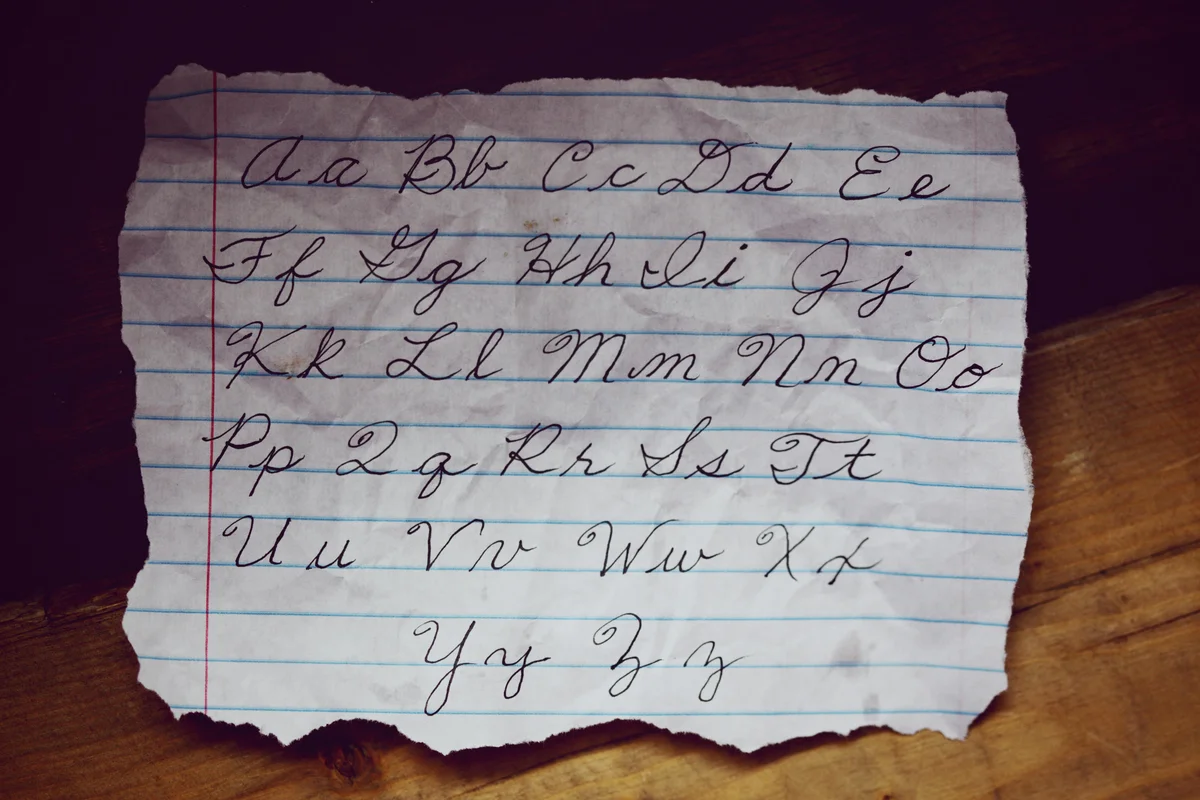
The Alternative: Cursive First
A growing movement advocates teaching cursive before or instead of print. Proponents argue this approach has significant advantages. In particular, it’s helpful for children who struggle with handwriting.
Arguments for cursive first:
- Eliminates letter reversals (b/d confusion) because cursive letters look distinctive
- Continuous flow reduces pencil lifting, which some children find easier
- Natural slant matches how the hand moves across the page
- Some dyslexic learners find cursive more intuitive (see our dyslexia-friendly reading instruction guide)
What Research Says About Handwriting
Scientific studies on handwriting instruction reveal several key findings. Understanding these results should inform your approach. Additionally, knowing the science helps you make confident decisions about your child’s education.
Handwriting and Brain Development
Brain scans show that writing by hand activates areas that typing doesn’t touch. Kids who write by hand remember more and think better. Moreover, it’s not just about making letters look nice. Writing helps kids learn at a deeper level.
After teaching multiple children to write using both methods, I’ve seen firsthand how forming letters supports learning. Research from the Institute of Education Sciences What Works Clearinghouse supports explicit handwriting instruction as part of effective literacy programs. Meanwhile, the National Center for Education Statistics data shows that handwriting fluency correlates with overall writing achievement.
Handwriting and Reading
Learning to write letters helps kids read better. Likewise, reading helps kids write better. These two skills work hand in hand. When your child forms a letter, they remember it. As a result, they spot that letter in books more easily.
Cursive Specifically
Research on cursive shows potential benefits for several areas:
- Letter recognition and spelling
- Composition length and complexity
- Engagement and attention
- Fine motor development
That said, we don’t have many good studies comparing cursive-first to print-first directly. Most research looks at cursive vs. typing instead. Therefore, take the “cursive is better” claims with a grain of salt.
Key Features to Consider When Choosing
Before comparing specific approaches, think about these key features that affect success:
- Your child’s fine motor development: Some children are ready for complex strokes earlier than others
- Learning style preferences: Visual learners may prefer print’s clarity while kinesthetic learners often excel with cursive’s flow
- Time investment: Print-first requires a later cursive transition whereas cursive-first may have a steeper initial learning curve
- Your curriculum’s approach: Matching your phonics program’s letter style creates consistency
- Future educational plans: Traditional schools typically use print first
Comparing the Two Approaches
| Factor | Print First | Cursive First |
|---|---|---|
| Letter Recognition | Matches book text immediately | Must learn both forms |
| Motor Demands | Simpler strokes, more lifting | Continuous flow, more complex |
| Reversals (b/d) | Common problem | Rare due to distinct forms |
| Speed Potential | Slower once developed | Faster with practice |
| Transition Issues | Must learn new system later | Print is picked up naturally |
| Modern Relevance | Print used in typing/signs | Signature/historical documents |
The “Cursive First” Programs
Several curricula teach cursive before print. Here are the top options available to homeschool families:
Logic of English
Our top pick for cursive-first families is Logic of English. It’s ideal for kids who mix up letters or have dyslexia. Additionally, the program builds fine motor skills step by step while tying cursive to phonics. Best for ages 4-8.
Handwriting Without Tears (Cursive Kickoff)
While their main program teaches print first, Handwriting Without Tears offers a cursive-first option called “Cursive Kickoff” for schools and homeschools. According to Cathy Duffy Reviews, this program provides developmentally appropriate instruction.
New American Cursive
For families seeking a budget-friendly option, New American Cursive delivers simple, clean cursive instruction. There are fewer loops to learn, so young kids find it easier to master. Best suited for ages 5-9.
Rhythm of Handwriting
Music-loving kids thrive with Rhythm of Handwriting. Letters are taught with songs and rhythm as part of Logic of English. Best for children who learn by moving and singing.
When Print First Makes Sense
Consider teaching print first if:
- Your child is already reading: Matching letters to books provides immediate satisfaction
- Fine motor skills are still developing: Simpler strokes may reduce frustration
- Your child will attend traditional school: Matching their instruction prevents confusion
- You use a print-based phonics program: Consistency supports learning
- Your child prefers print: Motivation matters for penmanship practice
When Cursive First Makes Sense
On the other hand, consider teaching cursive first if:
- Your child reverses letters frequently: Cursive naturally prevents b/d confusion
- Your child has dyslexia or dysgraphia: Some learners find cursive’s continuous flow easier
- Pencil lifting is problematic: Cursive reduces the need to lift and replace the pencil
- You want to skip the transition: No need to “unlearn” print patterns
- Your child is drawn to cursive: Interest drives better practice
A Third Option: Teach Both Simultaneously
Some homeschool families teach both print and cursive from the beginning. For instance, they might use print for workbooks and cursive for creative writing. This approach offers several advantages:
- Develops both skills from the start
- Allows children to discover their preference
- Avoids a later “transition” period
- Requires more instructional time initially
Practical Handwriting Tips (Regardless of Style)
Whatever approach you choose, these principles improve instruction across the board:
Develop Pre-Writing Skills
Before formal letter instruction, strengthen fine motor skills through:
- Playdough manipulation
- Cutting with scissors
- Drawing shapes and patterns
- Lacing and beading activities
- Coloring within boundaries
Ensure Proper Grip
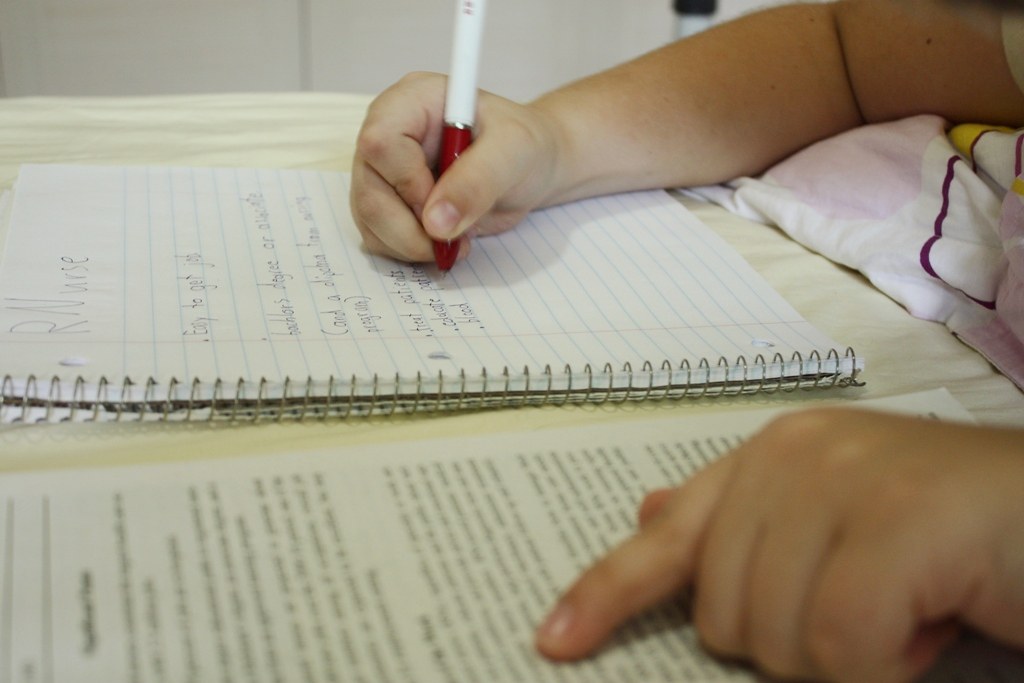
A good pencil grip stops hand pain and tiredness. The tripod grip uses the thumb, index, and middle finger. Of course, other grips work too, as long as they’re comfortable and efficient. Fix grip problems early, before bad habits stick. The U.S. Department of Education emphasizes proper motor development for academic success.
Use Appropriate Paper
Begin with wider lines and gradually transition to standard-width paper. Most curricula provide appropriately sized paper or guidelines for this purpose.
Teach Letter Formation Explicitly
Don’t assume children will figure out how to form letters on their own. Instead, teach specific strokes and directions. Consistent formation leads to automaticity over time.
Practice in Short Sessions
Less is more with penmanship. Ten good minutes beats thirty bad ones. Stop when your child gets tired or upset because short, happy practice builds skills faster than long, tearful sessions.
Make It Meaningful
Connect practice to real purposes such as:
- Writing letters to grandparents
- Keeping a nature journal
- Copying favorite poems or quotes
- Creating handmade cards
- Making lists for family activities
Recommended Curricula
For Print Instruction
- Handwriting Without Tears: Developmentally appropriate with multi-sensory components
- Zaner-Bloser: Traditional approach with clear, consistent letter forms
- A Reason for Handwriting: Scripture-based copy work with excellent letter models
For Cursive Instruction
- New American Cursive: Simplified cursive, good for beginners
- Logic of English Rhythm of Handwriting: Cursive-first with phonics integration
- Getty-Dubay Italic: Italic style that flows naturally into cursive
For detailed curriculum comparisons, see our best handwriting curriculum guide. If you’re working with a reluctant writer, you might also find our best writing curriculum for reluctant writers guide helpful. Parents working with children who have dyslexia should also read our dyslexia-friendly reading instruction guide.
What About Keyboarding?
In our digital age, keyboarding is undeniably important. However, research suggests handwriting should come first for these reasons:
- Young children lack fine motor development for efficient typing
- Handwriting supports reading and cognitive development in ways typing doesn’t
- Many standardized tests still require handwritten responses
Based on my experience with my own children, I recommend introducing keyboarding around age 8-9. This timing ensures children have both skills while protecting early developmental benefits. For more on building strong literacy foundations, see our reading comprehension strategies guide.
Frequently Asked Questions
Is cursive really necessary in the modern world?
Cursive remains valuable for signing documents, reading historical texts, and personal note-taking. Research also suggests cognitive benefits from cursive writing. Whether it’s “necessary” depends on your educational philosophy, but it’s certainly not obsolete.
My child hates handwriting practice. What can I do?
First, check for underlying issues like uncomfortable grip, inappropriate paper, or tasks that are too long. Then make practice purposeful because copying favorite quotes beats filling worksheets. Keep sessions short (5-10 minutes) and positive.
When should instruction begin?
Pre-writing skills can begin at age 3-4 through play. Formal letter instruction typically starts between ages 5-6, when fine motor skills and attention span are developmentally ready. Watch your child’s readiness rather than following arbitrary age guidelines.
What if my child’s handwriting is still messy after lots of practice?
Some children have naturally messier penmanship despite proper instruction. If it significantly impacts learning, consider evaluation for dysgraphia. Otherwise, focus on legibility rather than perfection and ensure typing skills are developed for longer tasks.
Should left-handed children learn differently?
Left-handed children benefit from specific accommodations like proper paper positioning (tilted right for lefties) and sitting to the left of right-handed classmates. Letter forms themselves don’t need to change. Nevertheless, instruction should account for left-hand mechanics.
Assessment and Progress Tracking
Whatever style you choose, tracking progress helps ensure proper development. Regular assessment prevents small issues from becoming ingrained habits.
What to Evaluate
- Letter formation: Are strokes made in the correct direction and order?
- Sizing: Are tall letters tall and short letters short?
- Spacing: Is there consistent space between letters and words?
- Baseline consistency: Do letters sit properly on the line?
- Pencil pressure: Is pressure appropriate (not too light or heavy)?
- Speed: Can your child write at a functional pace without sacrificing legibility?
Red Flags to Watch For
Consult an occupational therapist if you notice these warning signs:
- Consistent letter reversals past age 7-8
- Extreme fatigue or pain during writing
- Inability to maintain legibility for even short tasks
- Highly inconsistent letter sizing despite instruction
- Gripping the pencil so tightly that fingers turn white
Common Challenges and Solutions
Having taught multiple children with different learning styles, I’ve encountered these common issues:
Challenge: Child Hates Practice
Solution: Keep sessions short (5-10 minutes). Additionally, make practice meaningful by writing real messages such as letters to family, lists for activities, and labels for belongings.
Challenge: Letters Are Messy Despite Effort
Solution: Check paper positioning, pencil grip, and seating since environmental factors often cause problems. Use lined paper with raised lines or highlighted baselines for extra visual support.
Challenge: Child Mixes Print and Cursive
Solution: Actually, this is common and often acceptable for personal writing. If you want consistency, designate specific contexts for each style (cursive for journals, print for worksheets).
Challenge: Left-Handed Struggles
Solution: Position paper tilted to the right (opposite of right-handers) and ensure your child sits to the left of right-handed siblings. Consider instruction specifically designed for left-handers.
The Long-Term Perspective
After teaching multiple children through complete curricula, I can tell you that the early debates fade in importance. By middle school, most children develop their own hybrid style that combines elements of print and cursive based on what feels natural.
The most important outcomes are:
- Legibility: Can others read what your child writes?
- Speed: Can they write fast enough for note-taking and timed tests?
- Comfort: Can they write without pain or excessive fatigue?
- Willingness: Are they willing to write when needed?
If you achieve these goals, you’ve succeeded regardless of whether you started with print or cursive.
Making Your Decision
There’s no universally “right” answer to the cursive vs. print question. Having experimented with both approaches in our homeschool, I can tell you that child temperament and learning style matter more than which method you choose. Consider these factors:
- Your child’s individual needs and challenges
- Your family’s educational philosophy
- Whether your child will attend traditional school
- Your child’s preferences and motivation
The most important factor isn’t which style you teach first. Rather, it’s that you teach explicitly, provide appropriate practice, and maintain your child’s positive relationship with writing.
Whether you choose print first, cursive first, or a combined approach, consistent instruction with quality curriculum will develop the skills your child needs. Ultimately, the best program is the one you’ll actually use and that works for your unique learner.
Conclusion
After years of teaching kids to write, I’ve learned something important. The debate over cursive vs. print matters less than you think. What matters is that you teach well and practice often because both ways can work great for different children.
Here’s my advice: Pick the approach that fits your child now. If it’s not working, switch. If it’s working, keep going. Don’t aim for perfect penmanship. Instead, aim for writing that’s easy and useful.
Remember that penmanship is a tool, not an end in itself. Focus on building skills that serve your child’s communication needs while protecting their confidence and enthusiasm for writing. With patience and the right approach, every child can develop writing that works for them. For more guidance on building a complete language arts program, explore our best homeschool language arts curriculum guide.
Leave a Reply