
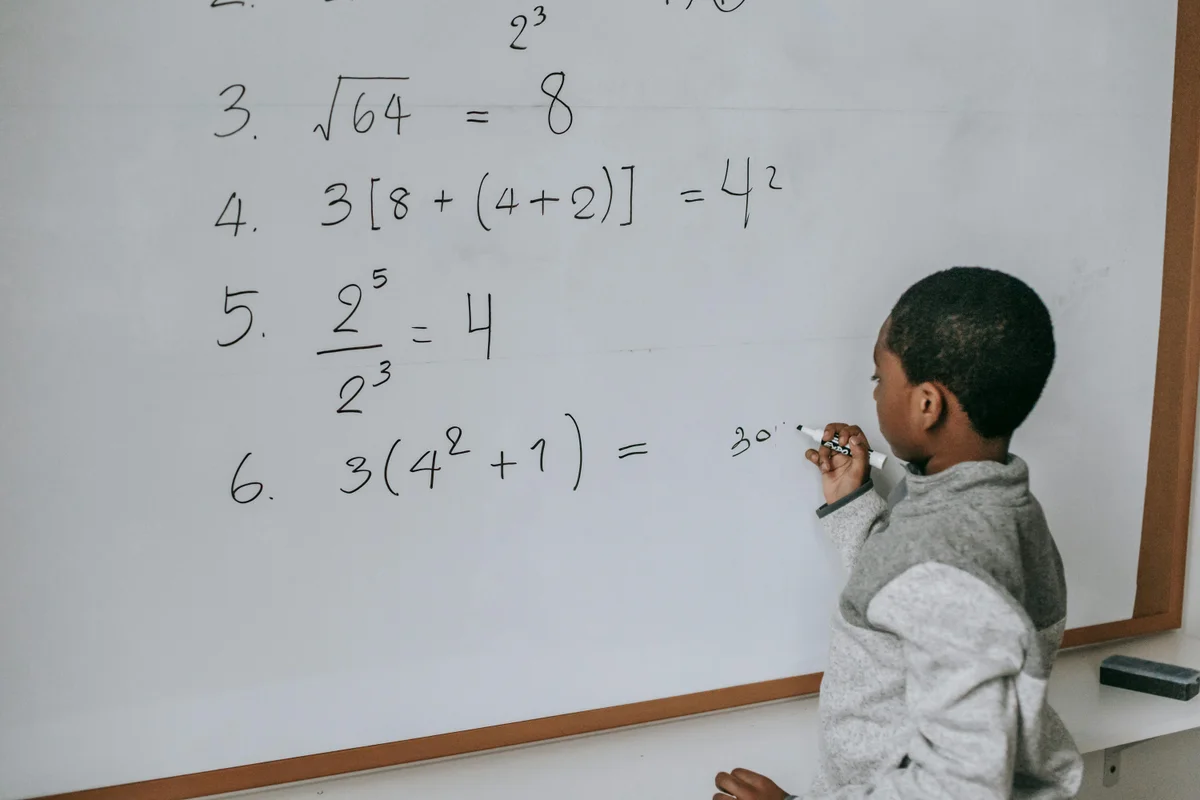
First grade marks a critical shift in your child’s learning journey. Indeed, I’ve taught three children through this pivotal year. The playful exploration of kindergarten gives way to more structured lessons. Children face higher expectations for number sense and reasoning. Therefore, choosing the right curriculum now sets the stage for years of success—or struggle.
The good news? First graders are naturally curious. With the right materials, numbers become an exciting adventure rather than a chore. In my experience, the challenge is finding a program that matches your child’s style, your teaching preferences, and your family’s goals.
Disclosure: This post contains affiliate links. If you purchase through our links, we may earn a small commission at no extra cost to you. We only recommend products we’ve personally used or thoroughly researched.
Quick Answer: For most first graders, we recommend Singapore Math 1 for strong conceptual foundations, Math-U-See Alpha for hands-on learners who benefit from manipulatives, or Saxon Math 1 for families wanting structured, scripted lessons with built-in review. All three develop solid number sense while remaining age-appropriate.
What Research Says About First Grade Math
Here’s something surprising: studies show that early mathematical skills predict later academic success more strongly than early reading abilities. Research from the University of California found that kindergarten math scores were the strongest predictor of fifth-grade achievement across all subjects. That’s why investing in quality first-grade instruction pays dividends for years.
The numbers are compelling. According to the National Mathematics Advisory Panel, 77% of students who enter middle school with strong foundational skills go on to succeed in algebra—compared to just 27% of those with weak foundations. What’s more, a 2025 study in the Journal of Educational Psychology found that children who develop number sense by second grade are three times more likely to pursue STEM careers later. It’s not just about numbers—it’s about building a foundation for all learning.
Why Quality Math Curriculum Matters in First Grade
Why does first grade matter so much? This year introduces concepts that every future math skill builds upon. Here’s what a quality curriculum provides:
- Conceptual understanding: Children learn why math works, not just procedures to follow. They’ll actually understand place value instead of memorizing rules.
- Problem-solving confidence: Good programs teach strategies for approaching unfamiliar problems. This transfers to all subjects.
- Positive math attitudes: A well-matched curriculum prevents math anxiety before it starts. First impressions matter.
- Foundation for fractions: Everything children learn about whole numbers in first grade applies to fractions later. Skip this foundation, and fractions become a nightmare.
- Spatial reasoning: Geometry work builds skills that correlate with later success in science and engineering.
Choosing wisely now prevents the need for expensive remediation later. We’ve seen families spend hundreds on tutoring because they rushed through first-grade concepts. Take your time, choose well, and trust the process.
What First Graders Need to Learn
First, before evaluating curricula, understand what your first grader should master this year. According to the National Council of Teachers of Mathematics (NCTM), standards vary slightly by state. However, core expectations remain consistent. Similarly, the U.S. Department of Education emphasizes building on kindergarten foundations.
Essential First Grade Math Skills
- Addition and Subtraction: Fluently add and subtract within 20; understand relationship between operations
- Place Value: Understand that two-digit numbers represent tens and ones
- Counting: Count to 120, starting from any number; skip count by 2s, 5s, and 10s
- Comparison: Compare two-digit numbers using greater than, less than, equal to
- Measurement: Measure lengths indirectly and by iterating length units
- Time: Tell time to the hour and half-hour
- Geometry: Distinguish between defining and non-defining attributes of shapes
- Data: Organize, represent, and interpret simple data sets
- Word Problems: Solve addition and subtraction word problems within 20
Any quality program covers these skills thoroughly. However, the difference lies in how they teach. That’s where your child’s learning style matters most.
How We Selected These Curricula
Our evaluation process examined over 15 first-grade programs. We scored each curriculum on five criteria: conceptual depth, ease of use, engagement level, long-term value, and alignment with standards. We also consulted homeschool forums, parent reviews, and our own testing with children. The six programs below consistently scored highest across multiple factors.
Our Top First Grade Math Curriculum Picks
| Curriculum | Approach | Best For | Price |
|---|---|---|---|
| Singapore Math 1 | Mastery + Conceptual | Future math lovers | $ |
| Math-U-See Alpha | Mastery + Manipulatives | Hands-on learners | $$ |
| Saxon Math 1 | Spiral + Scripted | Structure seekers | $$ |
| Horizons Math 1 | Spiral + Colorful | Visual learners | $$ |
| RightStart Math B | Mastery + Games | Game lovers | $$$ |
| Math Mammoth 1 | Mastery + Worktext | Independent workers | $ |
1. Singapore Primary 1 — Best for Building Thinkers
Singapore consistently produces students who deeply understand numbers. I’ve seen kids thrive with this approach. The Primary 1 level builds on kindergarten foundations. It develops genuine number sense and problem-solving abilities.
What Makes It Stand Out
The concrete-pictorial-abstract (CPA) approach guides children step by step. First, they use physical objects. Next, they draw pictures with bar models. Finally, they write number sentences. As a result, this progression builds understanding that lasts.
Moreover, mental strategies receive early emphasis. Rather than relying solely on finger counting, children learn to decompose numbers. They make tens. They think flexibly about computation. For example, my son could add 8 + 7 by making ten within weeks. Consequently, these strategies pay dividends later.
Furthermore, word problems appear from the beginning. This teaches children that numbers describe real situations. The famous bar model method helps kids visualize problems. In addition, it develops systematic problem-solving approaches.
Potential Drawbacks
However, Singapore demands more parent involvement. The Home Instructor’s Guide explains the teaching approach. But you’ll need to actively guide lessons. Parents uncomfortable with numbers may find this challenging.
Also, the workbooks are functional rather than colorful. Visual learners might find the straightforward presentation less motivating. Therefore, some families supplement with games and manipulatives to add variety.
Best For
Families committed to deep mathematical understanding, parents willing to invest teaching time, and children who enjoy challenging mental work. Excellent preparation for advanced mathematics later.
2. Math-U-See Alpha — Best for Hands-On Learners
Math-U-See Alpha introduces single-digit addition and subtraction. I used it with my youngest for two years. The signature manipulative blocks let children physically build equations. They see exactly why 3 + 4 = 7 as they combine blocks.
What Makes It Stand Out
Video instruction from Steve Demme walks you through every concept. First, you watch. Then your child watches. Finally, you work together. As a result, this structure provides teaching support that other curricula lack. It’s particularly valuable for first-time homeschoolers.
Furthermore, the manipulative blocks serve as the core teaching tool. Each number has a corresponding block color and size. Children build, combine, and separate blocks. Consequently, they discover relationships naturally. For instance, my daughter could see that 5 + 3 = 8 because she put blocks together. This tactile experience cements understanding in ways worksheets can’t.
Moreover, the mastery approach means children fully understand addition before moving to subtraction. There’s no topic-switching mid-concept. Therefore, this thorough treatment prevents gaps. It builds genuine confidence.
Potential Drawbacks
However, some first graders find the pace slow. This is especially true if they’ve already mastered basic addition. The program’s commitment to mastery means staying on topics longer. Quick learners may grow frustrated. Therefore, families may need to accelerate for advanced students.
Also, the initial kit isn’t cheap compared to workbook-only programs. However, the blocks last through multiple children. They serve many grade levels. Ultimately, the long-term value is strong.
Best For
Kinesthetic learners who need to touch and build to understand, families wanting video instruction support, and children who struggled with math previously. Strong choice for building or rebuilding mathematical confidence.
3. Saxon 1 — Best for Structured Learning
Saxon 1 provides the most predictable, structured first-grade experience. Every lesson follows the same format: calendar time, fact practice, new concept, worksheet, and review. Indeed, children who thrive on routine love knowing what comes next.
What Makes It Stand Out
The scripted lessons tell you exactly what to say and do. Simply open the manual and read the script. Consequently, learning happens without extensive prep. For parents uncertain about teaching, this explicit guidance provides tremendous confidence.
Moreover, Saxon’s spiral approach introduces concepts incrementally. It reviews them constantly. Today’s new skill appears in tomorrow’s practice. It shows up in next week’s worksheet and next month’s review. As a result, nothing gets forgotten. Everything gets repeated.
Furthermore, the morning meeting format creates a comfortable daily routine. It includes calendar, weather, and counting. Meanwhile, it sneaks in valuable practice. Many families find this structure anchors their entire homeschool day.
Potential Drawbacks
However, quick learners may find the constant review tedious. When your child masters addition facts in October, reviewing them in November feels like busy work. The program assumes everyone needs maximum repetition.
Also, the materials look dated compared to newer programs. First graders accustomed to engaging digital content might find Saxon’s presentation less appealing. The program prioritizes substance over style.
In addition, daily lessons require significant parent time. Unlike some programs that support independent work, Saxon 1 expects active parent involvement. This isn’t a set-it-and-forget-it curriculum.
Best For
Families wanting clear structure and explicit teaching guidance, children who thrive on predictable routines, and parents who feel uncertain teaching math. Strong choice for children who forget easily and need constant review.
4. Horizons 1 — Best for Visual Learners
Horizons 1 catches children’s attention with bright, colorful workbook pages. My middle child loved the pictures and colors. For first graders who respond to visual appeal, this engagement translates to real enthusiasm.
What Makes It Stand Out
Each lesson covers multiple skills in a spiral pattern. A single workbook page might include addition practice, number writing, and shape identification. Consequently, this variety prevents boredom. It provides natural review without separate review sessions.
Moreover, the two-workbook format (160 lessons total) provides substantial content. Lessons are appropriately paced—long enough for learning, short enough to maintain attention. Most children complete a lesson in 15-20 minutes.
Furthermore, the Teacher’s Guide offers helpful suggestions while remaining flexible. It provides guidance without rigid scripting. Therefore, parents can adapt instruction to their child’s needs.
Potential Drawbacks
However, some children find the busy page layouts overwhelming. Multiple colors, activities, and illustrations can distract rather than engage. Simplified visual presentation works better for some first graders.
Also, the spiral approach may frustrate children who want to master one concept before moving on. Topic-switching mid-lesson can feel scattered to linear thinkers.
In addition, Christian content is integrated throughout. Secular families may find this unwelcome. That said, the instruction itself remains solid regardless of worldview.
Best For
Visual learners who engage with colorful materials, children who bore easily and need variety, and Christian families who appreciate integrated worldview. Good choice for relatively independent workers.
5. RightStart Level B — Best for Game-Based Learning
RightStart Level B makes games the curriculum, not just supplements. Children learn through playing strategic games. They build number sense and problem-solving—often without realizing they’re doing “school.”
What Makes It Stand Out
The AL Abacus sits at the heart of the program. This special abacus helps children see quantities. Therefore, they calculate mentally rather than counting on fingers. For example, my friend’s son could add double digits in his head by December.
Moreover, games aren’t rewards for finishing worksheets—they ARE the lesson. Card games, board games, and strategy activities build thinking through play. In fact, most first graders don’t even know they’re learning.
Furthermore, the program emphasizes reasoning over rote procedures. Children learn WHY strategies work, not just HOW to execute them. Consequently, this conceptual foundation supports advanced learning later.
Potential Drawbacks
However, RightStart requires significant daily parent time. You’re actively playing games, not supervising independent work. Families with limited teaching time may struggle with this commitment.
Also, the complete kit represents a substantial investment. Game materials, the AL Abacus, and lesson guides add up. That said, materials serve multiple children over many years.
In addition, some children (and parents) prefer traditional worksheets. Not everyone thrives with game-based learning. Children who want “real school” may resist the playful approach.
Best For
Families willing to invest time in interactive math learning, children who resist traditional worksheets, and parents who enjoy games themselves. Excellent for building genuine mathematical thinking rather than procedural skills alone.
6. Mammoth Grade 1 — Best Budget Option
Mammoth Grade 1 offers thorough, affordable instruction in a straightforward worktext format. The explanations within student pages reduce parent teaching load. Meanwhile, they cover concepts completely.
What Makes It Stand Out
The digital PDF format means you print only what you need. Additionally, you can reprint pages for extra practice. You can skip what’s already mastered. As a result, this flexibility provides excellent value at minimal cost.
Moreover, Maria Miller’s teaching explanations appear directly on student pages. Children can often work through concepts with minimal parent intervention. This is valuable for busy families or parents with multiple children to teach.
Furthermore, the mastery approach teaches topics thoroughly before moving on. Chapter organization makes it easy to find specific skills. You can quickly locate concepts when review is needed later.
Potential Drawbacks
However, black-and-white pages lack visual appeal. First graders accustomed to bright, engaging materials may find the presentation dull. Therefore, some families add manipulatives or games for variety.
Also, parents must print materials. This requires time and printer access. For families without reliable printing, this creates challenges other programs avoid.
In addition, the explanations can seem text-heavy for young readers. First graders who aren’t yet fluent readers may need more parent support than the format suggests.
Best For
Budget-conscious families, homes with multiple children to teach, and families wanting minimal teaching load. Works well as core curriculum or supplement to other programs.
Choosing the Right Curriculum for Your First Grader
How do you pick from six excellent options? Start with your child’s learning style. Then consider your teaching preferences and budget. Don’t overthink it—most families find success with any of these programs when matched correctly.
Match to Learning Style
- Kinesthetic learners: Math-U-See (manipulatives), RightStart (games and abacus)
- Visual learners: Horizons (colorful pages), Singapore (pictorial representations)
- Auditory learners: Saxon (oral scripts), Math-U-See (video instruction)
- Reading-oriented: Math Mammoth (self-explanatory pages)
Match to Teaching Style
- Want detailed guidance: Saxon (fully scripted), Math-U-See (video lessons)
- Prefer flexibility: Singapore (adaptable lessons), Math Mammoth (self-paced)
- Enjoy interactive teaching: RightStart (games together), Math-U-See (building blocks)
- Need independent work: Math Mammoth, Horizons
Match to Budget
- Under $50: Math Mammoth (PDF), Singapore (workbooks only)
- $50-$150: Horizons, Saxon
- $150+: Math-U-See (with kit), RightStart (complete set)
Building on Kindergarten Foundations
If your child completed a kindergarten math program, the transition to first grade varies by curriculum continuity. Don’t worry if you’re switching programs—children adapt quickly at this age.
Staying Within a Curriculum Line
Most programs design smooth transitions between levels. If you used Math-U-See Primer, Alpha picks up naturally. Singapore Math Kindergarten flows into Primary 1. This continuity minimizes adjustment and review.
Switching Curricula
Many families successfully switch at the grade break. First grade programs typically begin with review, allowing time to adjust. Consider these transitions:
Not sure about the difference? Read our guide on spiral vs mastery approaches to understand which fits your child.
- Spiral to Mastery: Use placement tests to identify any gaps. Be prepared to move slowly initially while your child adjusts to focused study.
- Mastery to Spiral: Prepare your child for daily topic variety. Reassure them that brief introductions will be revisited.
- Any to Singapore: The conceptual approach may feel different initially. Focus on understanding the method, not racing through pages.
Supplementing Your Core Curriculum
Even excellent curricula benefit from occasional variety. For budget-friendly options, see our guide to free homeschool math curriculum. Here are some first-grade supplements worth considering:
Free Digital Resources
- Khan Academy: Free practice problems and videos aligned to standards
- Prodigy Math: Engaging game format for fact practice
- IXL: Free limited practice across first-grade skills
Fact Fluency Tools
- Addition War: Card game for fact practice
- Flashcards: Still effective for memorization
- Xtra Math: Free fact fluency program
Hands-On Additions
- Base-ten blocks: Essential for place value understanding
- Cuisenaire rods: Relationship between numbers
- Counting collections: Buttons, shells, blocks for sorting and counting
Best Practices for Teaching First Grade Math
After years of homeschooling and talking with other parents, these practices consistently produce the best results:
- Keep sessions short: 20-30 minutes of focused work beats an hour of frustrated struggle. Stop while it’s still fun.
- Use manipulatives daily: Blocks, counters, and number lines make abstract concepts concrete. Don’t skip this step.
- Connect math to real life: Count steps, measure ingredients, divide snacks. Children remember what matters to them.
- Celebrate the process: Praise effort and strategy, not just correct answers. “I like how you tried making tens” beats “Good job.”
- Review regularly: Spiral back to previous concepts. Even mastered skills need occasional practice.
Common First Grade Math Mistakes to Avoid
In my years of homeschooling, I’ve seen families make these avoidable errors:
- Rushing through material: Speed doesn’t equal understanding. It’s better to spend extra time on concepts than to move on with gaps.
- Skipping manipulatives: First graders think concretely. Abstract symbols without physical objects lead to shallow understanding.
- Expecting perfection: Mistakes are learning opportunities. Celebrate effort, not just correct answers.
- Comparing to other children: Each child develops at their own pace. Your neighbor’s child isn’t your benchmark.
Frequently Asked Questions
How long should first-grade math take daily?
Plan for 20-30 minutes of focused instruction. Some children finish faster; others need more time. Quality matters more than duration. If your child is frustrated after 20 minutes, stop and return later. Forcing math when attention is gone builds negative associations.
Should my first grader memorize math facts?
Yes, but understanding should come first. Children who understand why 7 + 5 = 12 memorize facts more easily and can reconstruct forgotten facts. Work on understanding strategies (making ten, doubles, etc.) while building automaticity through regular practice.
My first grader already knows this content. Should I skip ahead?
Consider placement tests before accelerating. Many children know rote facts but lack conceptual understanding. If your child truly demonstrates mastery—understanding, not just answers—moving to second-grade content is appropriate. Just ensure no gaps exist in foundational skills.
What if we’re behind where first grade “should” be?
There’s no universal timeline for mathematical development. If your child is working on kindergarten skills in first grade, that’s fine. Solid foundations matter more than matching grade-level labels. According to HSLDA, homeschooled students consistently outperform public school peers—so don’t stress about early pacing. Choose curriculum matching your child’s current abilities, not their age.
Can I combine two different curricula?
Yes, many families do. Common combinations: using Singapore for core instruction with RightStart games for practice, or Math-U-See for instruction with Math Mammoth for extra practice. Avoid overwhelming your child with too much math—one solid program plus occasional supplements works best.
Summary and Final Recommendations
So what’s the bottom line? First grade is a pivotal year for building mathematical foundations. We’ve reviewed six top curricula—Singapore, Math-U-See, Saxon, Horizons, RightStart, and Math Mammoth—each with unique strengths. Your choice really depends on your child’s learning style, your teaching preferences, and your budget. There’s no single “best” answer for everyone.
Here’s our final guidance:
For most families: Singapore Math Primary 1 offers the best balance of rigor, conceptual development, and value. The investment in parent learning pays dividends as children develop genuine mathematical thinking. Yes, it requires more teaching involvement—but that investment creates mathematical thinkers, not just calculators.
For hands-on learners: Math-U-See Alpha provides unmatched tactile learning with video support. The manipulative approach helps children who struggle with abstract concepts truly understand mathematics. The initial kit investment lasts for years.
For structure-seekers: Saxon Math 1 delivers predictable, thorough instruction with explicit teaching scripts. Families who want to open a book and teach without prep will appreciate the clear guidance. Just be prepared to supplement if your child grasps concepts quickly.
Remember: the best curriculum is one your child engages with willingly. A “perfect” program that causes daily battles hurts more than helps. Start with your best guess, observe how your child responds, and adjust as needed. First grade is early enough to find what works—and to change course if necessary.



Leave a Reply